
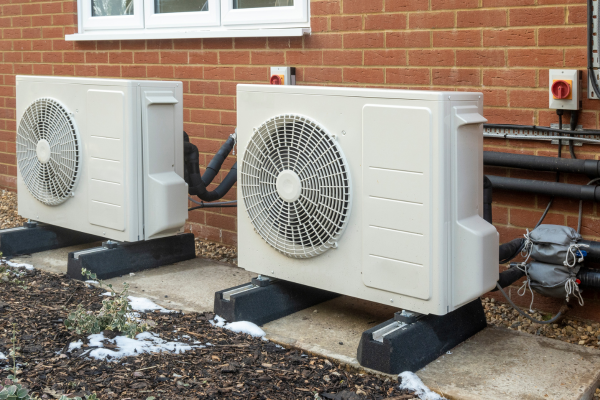
Stand in front of a heat pump and a central air conditioner in a Manor backyard, and you probably couldn’t tell them apart. Same metal box, same fan on top, same hum on a July afternoon.
The difference only shows up in January.
On a cold morning, one of those units keeps working, pulling heat from the outdoor air and moving it inside. The other sits quiet while a furnace in the garage or attic does the heating. That single difference shapes your winter bills, how your home handles a hard freeze, and how long your equipment lasts.
So which one belongs in a Central Texas home? For most Manor homeowners, the answer comes down to three things: what fuel your home already has, how you feel about winter storms, and what your current heating setup costs you. By the end of this guide, you’ll know which side of that line your home falls on, plus the hybrid option many homeowners don’t know exists.
Key Takeaways
- A heat pump is an air conditioner that can also run in reverse to heat your home. In summer, a heat pump and a similarly sized, efficient central AC cool your home equally well.
- The real difference is winter heating. A heat pump heats with electricity very efficiently, while a central AC needs a separate furnace, either gas or electric.
- If your home is all-electric and currently heats with an electric furnace or heat strips, a heat pump almost always lowers winter heating costs.
- If your home has natural gas and a working gas furnace, a central AC paired with that furnace remains a strong, reliable choice.
- A dual-fuel system combines a heat pump with a gas furnace, using each when it works best.
- Heat pumps lose efficiency in deep cold, so backup heat matters during rare Central Texas freezes like Winter Storm Uri in 2021.
- The federal 25C tax credit for heat pumps ended for systems installed after December 31, 2025, so check your utility for current rebates instead.
How a Central AC and a Heat Pump Actually Work
Both systems use the same basic cycle. Refrigerant absorbs heat from inside your home at the indoor coil, carries it outside, and releases it through the outdoor coil. That’s how air conditioning works, whether the label says “heat pump” or “AC.”
A central AC only runs that cycle in one direction. For winter heat, it relies on a separate furnace, which usually sits in an attic, closet, or garage in Manor homes. That furnace burns natural gas or uses electric heating elements.
A heat pump adds a part called a reversing valve. In winter, the valve reverses the refrigerant flow, so the system pulls heat from the outdoor air and releases it inside. Even cold air holds usable heat, and the heat pump moves it indoors.
That’s the efficiency advantage. According to the U.S. Department of Energy’s guide to air-source heat pumps, a properly installed heat pump can deliver up to three times as much heat energy to a home as the electrical energy it uses. By comparison, an electric furnace turns each unit of electricity into roughly one unit of heat.
Most heat pumps in Central Texas also include backup electric heat strips in the indoor air handler. Those strips kick in when the outdoor temperature drops too low for the heat pump to keep up on its own.
Summer Performance: A Tie in Central Texas Heat
Here’s the part that surprises many homeowners: in summer, there’s no meaningful difference.
A heat pump in cooling mode is an air conditioner. If you compare a 3-ton heat pump and a 3-ton central AC with the same SEER2 rating, they’ll cool your home the same way, remove the same amount of humidity, and use about the same electricity.
That matters in Manor, where cooling is the main event. Summer highs routinely sit in the upper 90s, and Austin’s Camp Mabry weather station averages 29 days at or above 100°F each year, based on National Weather Service records reported by KXAN. Your system spends far more hours cooling than heating.
So the summer question isn’t “heat pump or AC.” It’s the same question for both:
- Is the system sized correctly with a Manual J load calculation?
- Does it have a high enough SEER2 rating for your budget?
- Is it single-stage, two-stage, or variable-speed?
Federal efficiency rules also treat Texas as part of the Southern region. Since January 2023, new split-system central ACs and heat pumps installed here must meet a minimum of 14.3 SEER2 for most residential sizes (slightly lower for some larger AC systems). Anything you buy today starts from that baseline.
Winter Performance: Where the Real Difference Lives
Central Texas winters are short and mild compared with most of the country, but they’re not nothing. Cold fronts push overnight lows into the 30s, and occasional hard freezes still happen. Austin dropped to 18°F on February 20, 2025, according to KXAN’s weather data.
Mild Winter Days
On a typical Manor winter day with temperatures in the 40s to 60s, a heat pump is in its comfort zone. It moves heat efficiently, runs quietly, and keeps electricity use low.
This is where a heat pump beats an electric furnace by a wide margin. If you’re heating with electric resistance today, a heat pump can cut the electricity used for heating significantly on these days.
Cold Snaps and Hard Freezes
As outdoor temperatures fall toward freezing and below, a heat pump has less heat to pull from the air. Its efficiency drops, and the backup heat strips start running more often. Heat strips work like an electric furnace, so heating costs rise during those stretches.
A bigger concern for many Texans is extreme weather. During Winter Storm Uri in February 2021, the National Weather Service reported temperatures across the Austin and San Antonio region falling into the single digits and teens, with days below freezing. Widespread power outages followed.
Two things are worth understanding here:
- During a power outage, both systems stop. A gas furnace also needs electricity to run its blower, igniter, and controls. Neither system heats your home without power unless you have a generator.
- With power on, a gas furnace delivers steady heat no matter how cold it gets. A heat pump with properly sized heat strips also keeps the home warm, but at a higher electric cost during the coldest hours.
Newer cold-climate and variable-speed heat pumps hold their capacity much better at low temperatures than older models. For a Central Texas home, though, the key is simply making sure the backup heat is sized correctly for the rare hard freeze.
Cost Comparison: Upfront and Long-Term
The right choice often depends less on the equipment and more on what your home already has.
| Factor | Heat Pump | Central AC + Gas Furnace | Central AC + Electric Furnace |
| Summer cooling | Same as AC at equal SEER2 | Same as heat pump | Same as heat pump |
| Mild-winter heating cost | Low | Low to moderate | High |
| Hard-freeze heating cost | Moderate to high (heat strips) | Low to moderate | High |
| Needs natural gas | No | Yes | No |
| Combustion safety concerns | None | Carbon monoxide risk, needs annual checks | None |
| Equipment running time | Year-round | AC in summer, furnace in winter | AC in summer, furnace in winter |
Upfront Price
A heat pump usually costs a bit more than a comparable central AC alone because it does two jobs. Compared with replacing both an AC and a furnace, though, a heat pump with an air handler can come out close or lower.
Operating Costs
Electric heating is becoming the norm, especially in warm states. The U.S. Energy Information Administration reports that electricity is becoming more common for residential heating, with 42% of U.S. households using it as their main heating fuel in 2024. Homes in the warmest parts of the country were the most likely to heat with electricity.
Your current heating fuel decides most of the long-term math:
- All-electric home with an electric furnace or heat strips: A heat pump usually lowers winter bills, because it delivers far more heat per kilowatt-hour.
- Home with natural gas and a newer gas furnace: Savings from switching are smaller and depend on local gas and electric rates. Keeping the gas furnace and replacing just the AC is often the most cost-effective move.
- Home with an aging gas furnace that also needs replacing: This is where the decision gets interesting, and where a dual-fuel system is worth considering.
Incentives in 2026
The federal Energy Efficient Home Improvement Credit (Section 25C), which covered 30% of qualifying heat pump costs up to $2,000, ended for systems placed in service after December 31, 2025. It no longer applies to new installs.
Utility programs may still help. Most of Manor is in Oncor’s delivery area, while parts of town are served by Bluebonnet Electric Cooperative. Both utilities have offered energy efficiency programs in recent years, so check their current rebates before you buy.
The Dual-Fuel Option: Using Both
A dual-fuel system, sometimes called a hybrid system, pairs a heat pump with a gas furnace. The heat pump handles cooling all summer and heating on mild winter days. When the outdoor temperature drops below a set point, the system switches to the gas furnace.
For Central Texas homes with gas service, dual fuel offers:
- Efficient electric heating for most winter hours
- Steady gas heat during cold snaps and freezes
- A backup heat source if one part of the system needs repair
The trade-off is cost and complexity. You’re maintaining two heating systems, and the upfront price is higher than a single system. It makes the most sense when you’re replacing both an AC and a gas furnace at the same time.
Lifespan and Maintenance Differences
Because a heat pump heats and cools, it runs in every season. A central AC rests through the winter while the furnace takes over.
That extra runtime means a heat pump’s outdoor unit can wear faster than an AC that only runs in summer. In practice, Central Texas winters are mild enough that the difference is smaller here than in colder states, but it’s worth factoring in.
Maintenance needs differ too:
- Heat pumps need attention to the reversing valve, defrost controls, and heat strips, ideally with a check before each season.
- Central AC with a gas furnace needs a spring AC tune-up and a fall furnace inspection, including a check of the heat exchanger and burners for safety.
Either way, two professional visits a year is the standard recommendation for Manor’s long cooling season.
Which System Fits Your Manor Home?
Use this as a quick guide.
A heat pump is likely the better fit if:
- Your home is all-electric with no gas service
- You currently heat with an electric furnace or heat strips
- You’re in a newer all-electric community or prefer to avoid combustion appliances
- You want one outdoor unit for heating and cooling
A central AC with a gas furnace may be the better fit if:
- Your home already has natural gas and a gas furnace in good condition
- You only need to replace the outdoor AC
- You want the steadiest heat during rare deep freezes
A dual-fuel system is worth considering if:
- Your home has gas service
- Both your AC and furnace are near the end of their life
- You want efficient electric heat most of the winter with gas backup for the coldest days
Common Mistakes When Choosing Between Them
Comparing SEER2 alone. SEER2 only measures cooling efficiency. For a heat pump, also look at HSPF2, which measures heating efficiency.
Ignoring your existing ducts and electrical panel. Switching from gas to a heat pump can change electrical needs, especially for heat strips. A good contractor checks the panel capacity before quoting.
Skipping the load calculation. A heat pump sized only by square footage can be oversized for summer and undersized for heat-strip backup in winter. A Manual J calculation sets both correctly.
Undersizing backup heat. Heat strips that are too small leave you cold during the rare hard freeze. That’s exactly when you need them most.
Assuming the old setup is still right. If your home has new windows, added insulation, or a sealed attic, your heating and cooling needs may have changed since the original system went in.
Choosing Between a Heat Pump and Central AC in Manor
In Central Texas, a heat pump and central AC are equal for the hardest part of the job: surviving a long, hot, humid summer. The decision really comes down to winter: how your home heats today, whether you have gas service, and how much the occasional freeze factors into your peace of mind.
For many all-electric Manor homes, a heat pump is the clear winner. For homes with gas and a healthy furnace, a new central AC is often the smarter spend. For homes replacing everything at once, dual fuel can give you the best of both.
ATX Heating & Air Conditioning LLC is a family-owned, licensed HVAC company (TACLA142610C) based in Manor, and we install both. If you’re leaning toward the all-in-one option, our heat pump installation in Manor starts with a Manual J calculation and a check of your backup heat and electrical panel. If your gas furnace still has years left, a new system through our AC installation service in Manor may be the better value. Either way, we’ll walk you through the numbers for your home. Call 737-221-4420 to schedule an assessment.
FAQ
Is a heat pump better than central AC in Texas?
For cooling, they perform the same when size and SEER2 ratings match. A heat pump is better for heating in all-electric homes because it uses electricity far more efficiently than an electric furnace. Homes with natural gas and a working gas furnace often do just as well with a central AC.
Do heat pumps work during a Texas freeze?
Yes, but their efficiency drops as temperatures fall, so backup heat strips run more often. With properly sized backup heat, a heat pump keeps your home warm during a freeze. During a power outage, both heat pumps and gas furnaces stop working without a generator.
Does a heat pump cost more to run than an AC?
In summer, no. A heat pump and a central AC with the same SEER2 rating use about the same electricity for cooling. In winter, a heat pump usually costs less to run than an electric furnace, while a gas furnace comparison depends on local energy rates.
How long does a heat pump last in Central Texas?
Because heat pumps run year-round, their outdoor units can wear faster than an AC that only runs in summer. Central Texas winters are mild, which helps. Regular maintenance and correct sizing are the biggest factors in how long either system lasts.
Can I get a tax credit for a heat pump in 2026?
The federal 25C tax credit for heat pumps ended for systems placed in service after December 31, 2025. Check with your electric utility, such as Oncor or Bluebonnet Electric Cooperative, for any current rebate programs.

