

Every Manor home has one. The room that never quite cools down.
Maybe it’s the bonus room over the garage that hits 82°F by 4 p.m. Maybe it’s the converted garage your teenager now calls a bedroom. Or maybe it’s the whole second floor, where the thermostat downstairs says 74°F and nobody upstairs believes it.
When that happens, homeowners usually hear two very different fixes. One is a bigger or better central air conditioner. The other is a ductless mini-split. Both work. They just solve different problems, and choosing the wrong one can mean spending thousands without fixing the room that started the conversation.
Read on, and you’ll learn how each system moves air, where each one wins in a Central Texas home, the costs to expect, and a simple room-by-room way to decide which one belongs in your house. There’s also a third option most people don’t consider until they see it laid out.
Key Takeaways
- Central AC cools the whole house through a network of ducts. A ductless mini-split cools individual rooms or zones with indoor units mounted on the wall or ceiling, connected to an outdoor unit by a small line set.
- Mini-splits skip ductwork entirely, which avoids the energy lost through leaky ducts. In most Central Texas homes, those ducts run through a hot attic.
- Central AC is usually the lower-cost, simpler choice for cooling an entire home with good ductwork.
- Mini-splits shine in additions, converted garages, bonus rooms, older homes without ducts, and rooms that never stay comfortable.
- Mini splits cost more per ton of cooling than central systems, and some homeowners don’t love the look of wall-mounted indoor units.
- Many Manor homes get the best result from a combination: central AC for the main house and a mini split for the problem room.
- Most mini-splits are heat pumps, so they also provide efficient heat on mild Central Texas winter days.
How Central AC and Ductless Mini Splits Work
Both systems use the same refrigeration cycle. They pull heat out of your indoor air at a cold coil and release it outside through an outdoor unit. The difference is how the cooled air reaches you.
Central Air Conditioning
A central AC system has an outdoor condenser and an indoor coil paired with a furnace or air handler. The blower pushes cooled air through supply ducts to vents in each room, then pulls warm air back through return ducts.
In most Manor homes, those ducts run through the attic. That’s standard construction in Central Texas, but it means the cool air travels through one of the hottest spaces on the property before it reaches your rooms.
One thermostat typically controls the whole system. Some homes add zoning dampers to split the house into areas, but the system still relies on the same duct network.
Ductless Mini Splits
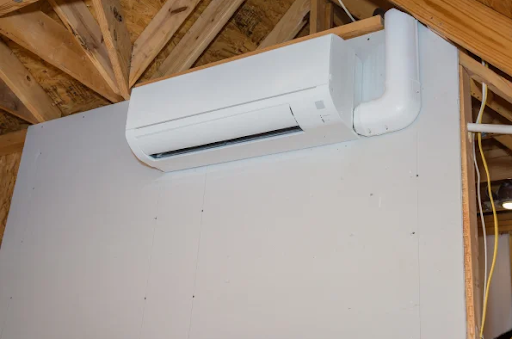
A ductless mini split also has an outdoor unit, but instead of ducts, it connects to one or more indoor units through a small bundle of refrigerant lines, power, and a condensate drain. That bundle passes through a hole about three inches wide in an exterior wall.
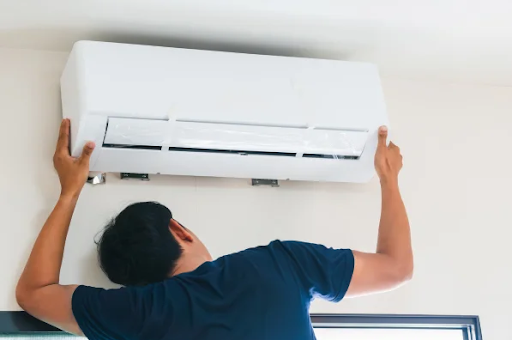
Each indoor unit, usually mounted high on a wall, cools only the room or zone it serves. Each one also has its own thermostat and remote, so the bedroom can sit at 70°F while an unused guest room stays at 78°F.
According to the U.S. Department of Energy’s guide to ductless mini-split heat pumps, many models can support as many as four indoor units from a single outdoor unit, and the outdoor unit can sit up to 50 feet from the indoor unit.
Most mini-splits sold today are heat pumps, which means they handle heating as well as cooling.
The Duct Question: Why It Matters So Much in Central Texas
The biggest efficiency difference between these systems isn’t the equipment. It’s the ducts.
ENERGY STAR’s guidance on duct sealing notes that in a typical house, about 20% to 30% of the air moving through the duct system is lost to leaks, holes, and poorly connected sections. The Department of Energy goes further, noting that duct losses can account for more than 30% of the energy used for heating and cooling.
Now picture that happening in a Manor attic in August, where temperatures climb far above the outdoor air. Every leak in the supply duct dumps cooled air into the attic. Every leak in the return duct pulls hot, dusty attic air into your system.
That’s why a central AC with poorly sealed or poorly insulated ducts can struggle even when the equipment itself is new and efficient. It’s also why mini splits have a natural advantage: no ducts, no duct losses.
The fix for a central system isn’t always a mini split, though. Sealing, insulating, or redesigning ductwork can recover much of that lost efficiency. If your home already has ducts and you want whole-home cooling, improving those ducts often costs less than switching the entire house to ductless.
Where Central AC Is the Better Choice
Central air remains the most common way to cool a home in Texas for good reasons.
You want to cool the whole house evenly. One central system with well-designed ducts can deliver cool air to every room from a single outdoor unit and a single thermostat.
Your home already has good ductwork. If the ducts are properly sized, sealed, and insulated, replacing the outdoor and indoor equipment is usually the most cost-effective route.
You prefer hidden equipment. Central AC uses vents and returns, not wall-mounted units. Many homeowners prefer the cleaner look.
You want whole-home filtration and air quality upgrades. Ducted systems make it easy to add higher-MERV filters, media filters, UV lights, or whole-home dehumidifiers that treat all the air in the house.
Budget per square foot matters most. The Department of Energy estimates that ductless systems cost about 30% more per ton of cooling capacity than central systems, not counting ductwork. For an entire home that already has ducts, central AC usually costs less upfront.
Where a Ductless Mini Split Is the Better Choice
Mini splits solve problems that central systems handle poorly. In Manor, a few situations come up repeatedly.
Room additions and sunrooms. Extending existing ducts to a new room can starve the rest of the house of airflow if the original system wasn’t sized for the extra space. A dedicated mini split cools the addition without touching the main system.
Converted garages and workshops. Garages rarely have ducts, and they’re often the hottest space in the house. A mini split turns a garage into a usable gym, office, or bedroom year-round.
Bonus rooms and upstairs hot spots. Rooms over the garage or at the end of a long duct run often stay several degrees warmer. A mini split targets that one room directly.
Older homes without ductwork. Some older homes near downtown Manor and in surrounding rural areas were built without central ducts. Adding ductwork can be invasive and expensive. Mini-splits avoid tearing into walls and ceilings.
Home offices and bedrooms with different comfort needs. Each indoor unit has its own setting, so you can keep a home office cool during work hours without overcooling the rest of the house.
Guest suites and casitas. Separate living spaces benefit from independent control, especially when they’re only used part of the time.
Cost Comparison: Upfront and Operating
Prices vary with brand, efficiency, and the details of your home, so treat this as a comparison of how costs behave rather than a price list.
| Factor | Central AC | Ductless Mini Split |
| Best for | Whole-home cooling with existing ducts | Single rooms, additions, homes without ducts |
| Upfront cost, whole home | Usually lower with good existing ducts | Usually higher, especially with many zones |
| Upfront cost, one room | High if ducts must be added | Usually lower and simpler |
| Duct losses | Can be significant in attic ducts | None |
| Room-by-room control | Limited without zoning | Built in |
| Installation disruption | Low for replacement, high if new ducts needed | Low, small wall opening |
| Appearance | Hidden vents | Visible indoor units |
| Heating | Needs furnace or heat pump | Most models heat and cool |
Operating Costs
Mini-splits are typically variable-speed systems. They ramp up and down to match the load instead of cycling fully on and off. Combined with no duct losses, many high-efficiency mini splits use less electricity to cool a given room than a central system with leaky attic ducts.
That said, cooling an entire home with many separate mini-split zones doesn’t automatically save money. Several indoor units running at once can add up. Savings are greatest when you cool only the rooms you’re using.
Efficiency Ratings
Both systems are rated with SEER2 for cooling efficiency. Mini-splits often carry high SEER2 ratings because of their variable-speed compressors. If you’re comparing quotes, compare SEER2 across the actual systems being offered, not just the category.
Comfort and Humidity in Manor Summers
Central Texas comfort is as much about humidity as temperature, especially on the east side of the Austin metro.
Variable-speed mini splits run for long, steady cycles at lower speeds. That steady operation gives the indoor coil more time to pull moisture from the air, which often makes rooms feel more comfortable at the same thermostat setting. Many models also offer a dedicated dry mode.
Central systems can control humidity well too, especially two-stage or variable-speed models sized with a Manual J load calculation. The problem cases are oversized single-stage systems that short cycle, cooling the air quickly but shutting off before removing much moisture.
Whichever system you choose, correct sizing matters. The Department of Energy points out that oversized or poorly placed mini split indoor units can short cycle, just like an oversized central system. A mini split that’s too big for the room will feel cold and clammy instead of cool and dry.
Maintenance Differences
Both systems need regular care, but the tasks look different.
Central AC maintenance includes changing the central filter, cleaning the indoor and outdoor coils, clearing the condensate drain, checking refrigerant charge, and inspecting the ductwork for leaks or damage.
Mini-split maintenance includes cleaning each indoor unit’s washable filters, often monthly during heavy use, plus periodic professional cleaning of the indoor coil and blower wheel. If indoor units aren’t cleaned, dust and mold can build up in the blower and cause musty smells. The outdoor unit needs the same coil cleaning and inspection as a central system.
If you have several mini-split heads, that’s several filters to clean. Some homeowners love the hands-on control. Others prefer one central filter to change.
The Hybrid Option: Central AC Plus a Mini Split
You don’t have to choose one system for the whole house. In many Manor homes, the most effective setup is a combination:
- A central AC handles the main living areas through existing ducts
- A mini split covers the room the central system can’t reach well, such as a garage conversion, addition, or hot upstairs bedroom
This approach avoids oversizing the central system just to push more air into one problem room. It also takes load off the central AC, which can help it run more efficiently and last longer.
How to Decide: A Room-by-Room Approach
Instead of asking “mini split or central AC?” for the whole house, walk through your home and ask these questions about each problem area:
- Does this space have ducts already? If yes, check whether the ducts are sized, sealed, and insulated properly before replacing anything.
- Is the problem one room or the whole house? One room points toward a mini split. The whole house points toward central AC or duct repairs.
- Is this a new or converted space? Additions and garages are classic mini split territory.
- How old is your central system? If it’s near the end of its life, you may be able to right-size the replacement and add a mini split for the problem space at the same time.
- How do you feel about wall-mounted units? If appearance is a dealbreaker, ceiling cassette or ducted mini split options exist, or central AC may be the better fit.
A professional assessment ties these answers together with a load calculation for each space, so the equipment matches the actual need.
Choosing Between a Ductless Mini Split and Central AC in Manor
There’s no single winner in the ductless mini split vs central AC debate. Central air is still the most practical way to cool a whole Manor home with good ductwork. Ductless mini-splits are often the smartest fix for rooms that central systems struggle to reach, and for homes or spaces that never had ducts in the first place.
Before you decide, take a close look at your ducts. If your central system struggles because of leaky or undersized ductwork, professional air duct services in Manor can sometimes restore comfort without changing your equipment. If the problem is a garage, addition, or bonus room that the ducts will never serve well, a ductless mini-split system in Manor is often the cleaner solution.
ATX Heating & Air Conditioning LLC is a family-owned, licensed HVAC company (TACLA142610C) based in Manor. We install and service both central and ductless systems, and we’ll help you figure out which one fixes your problem room, or whether a combination makes the most sense. Call 737-221-4420 to schedule an assessment.
FAQ
Is a ductless mini split cheaper than central AC?
For cooling a single room, addition, or garage, a mini split is usually cheaper than extending ductwork. For cooling an entire home that already has good ducts, central AC typically costs less upfront. The Department of Energy estimates ductless systems cost about 30% more per ton of cooling than central systems, not including ductwork.
Can a mini split cool a whole house in Texas?
Yes, with multiple indoor units, often called a multi-zone system. It can work well in homes without ductwork. For homes that already have good ducts, central AC is usually the simpler and lower-cost whole-home option.
Are mini splits more energy efficient than central air?
Often, yes, because they avoid duct losses and use variable-speed compressors. Savings depend on how you use them. Running several indoor units at once to cool the entire house may not save as much as cooling only the rooms you’re using.
Do mini splits work for heating in Central Texas winters?
Most ductless mini splits are heat pumps, so they heat as well as cool. They work efficiently through typical Manor winter weather, though their efficiency drops during hard freezes. Many cold-climate models are designed to keep heating at much lower temperatures.
Can I add a mini split to a house that already has central AC?
Yes. Adding a mini split for a garage, addition, or hot room is one of the most common uses. It cools that space directly without forcing your central system to work harder or requiring new ductwork.

