

That hissing sound from your outdoor AC unit after it shuts down might be completely normal. Or it might be warning you that a refrigerant leak is quietly draining your system and you’re heading toward a compressor failure that costs $2,000 to $4,000 to fix. The difference between the two comes down to what kind of hissing you’re hearing, how loud it is, and whether it’s a new sound or one your AC has always made.
A faint hissing sound during or immediately after shutdown is normal pressure equalization. A loud, high-pitched hissing that wasn’t there before, or hissing that continues well after the unit shuts off, signals a refrigerant leak or valve problem that needs professional diagnosis fast.
In the next few minutes, you’ll know exactly which situation you’re in and whether you can ignore it or need to call a technician today.
Key Takeaways
- Brief, faint hissing after AC shutdown is usually normal pressure equalization inside refrigerant system lines.
- Loud, persistent hissing often signals refrigerant leaks that can damage compressors and reduce cooling efficiency.
- Refrigerant leaks force compressors to overwork, increasing repair costs and shortening overall system lifespan significantly.
- Oily residue on copper refrigerant lines commonly indicates active leaks needing immediate professional HVAC diagnosis.
- Ignoring unusual AC hissing sounds can quickly turn affordable repairs into expensive compressor replacement emergencies.
Why Your AC Hisses at All
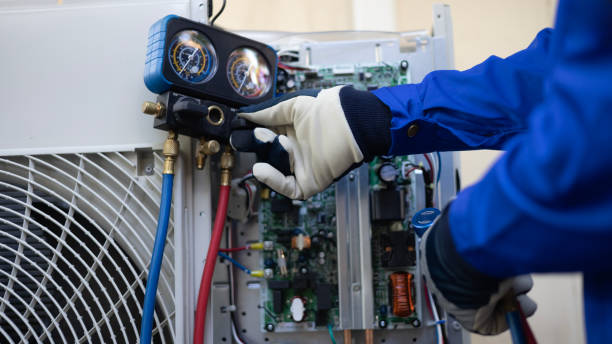
Your air conditioning system is pressurized. High-pressure liquid refrigerant moves through the outdoor condenser, where it releases heat to the surrounding air. When the system shuts down, pressure inside the lines drops gradually. This depressurization process can create a faint hissing sound, similar to air escaping from a balloon.
That’s the normal sound. It lasts a few seconds and is quiet enough that you might only hear it if you’re standing directly next to the outdoor unit.
The problem starts when the hissing is loud and high-pitched, or when it continues for more than a minute after the compressor stops running. That’s when something inside the system is broken.
Normal Hissing vs. The Kind You Should Worry About
Normal post-shutdown hissing:
- Faint and brief, lasting 5 to 15 seconds
- Happens immediately when the compressor shuts off
- Sounds like a gentle whisper, not a loud stream
- The same sound every time the system cycles
- No other symptoms (cooling works fine, no unusual energy bills)
Hissing that means you have a problem:
- Loud or high-pitched, impossible to ignore if you’re near the unit
- Continues for 30 seconds or longer after shutdown
- Sounds like pressurized air escaping forcefully
- New sound your AC didn’t make before
- Accompanied by reduced cooling, higher humidity indoors, or rising energy bills
If your hissing fits the second category, don’t ignore it. The longer you wait, the more refrigerant escapes and the harder your compressor has to work.
The #1 Cause: Refrigerant Leaks
A refrigerant leak is the most common reason for loud hissing after shutdown. When refrigerant escapes through a crack or pinhole in the copper lines or coils, the high-pressure liquid becomes a high-pressure gas that rushes out, creating that hissing noise.
In the early stages of a leak, your AC still cools, but not as well. You might notice the temperature rising a couple of degrees higher than it should be, or humidity levels indoors increasing even though the system is running. The high-pitched hissing is your signal that the leak is actively happening.
If you ignore the sound and keep running the system, two things happen. First, your compressor works harder and harder to maintain pressure with less and less refrigerant, until it overheats and shuts down. Second, the compressor eventually fails under the strain. Once it fails, you’re looking at replacement costs in the thousands.
The size and location of the leak matter. A pinhole leak in a braze joint might develop slowly over months. A crack in the evaporator coil inside your furnace or air handler can empty the system in a matter of days.
What you can do: Don’t recharge the system yourself or at a shop that isn’t EPA-certified. Refrigerant is strictly regulated, and adding more without fixing the leak just delays the inevitable. Call a certified technician who can locate the leak using nitrogen or tracer dye, repair it properly, and recharge the system with the right refrigerant type.
Cause #2: Excess Pressure in the Compressor
Sometimes, loud hissing happens because there’s too much pressure in the system, not too little. This typically occurs after a recharge service goes wrong. A technician might have added too much refrigerant, thinking they were correcting for a small leak.
Modern AC systems have safety shutoffs that activate when pressure gets dangerously high. If you heard a loud, piercing shriek just before the system shut off, that’s often what happened.
How to tell: After a recent recharge service (like within the last week), if you notice new hissing or sudden shutdowns, the technician likely overcharged the system.
What to do: Have a certified technician check your refrigerant charge using proper diagnostic equipment. They can measure the exact pressure and subcooling to confirm whether you’re overcharged, undercharged, or right. Don’t assume the previous technician got it right.
Cause #3: Thermostatic Expansion Valve (TXV) Failure
The thermostatic expansion valve controls how much refrigerant flows from the indoor coil to the outdoor unit. It’s a small but critical component that regulates pressure throughout the system.
When a TXV fails or malfunctions, the pressure inside the system can fluctuate wildly. You’ll hear hissing not just after shutdown, but sometimes during operation. The hissing might be intermittent or come in bursts.
Other signs of TXV failure include warm air coming from your vents even when the system is running, frost buildup on the evaporator coil, or indoor humidity that won’t drop no matter how long the AC runs.
TXVs don’t have a set lifespan, but in systems that run constantly in hot climates like Austin, they often fail between 5 and 10 years of age. The component itself isn’t expensive, but it requires a certified technician to replace it safely.
Cause #4: Leaky or Damaged Refrigerant Lines
Copper refrigerant lines can develop leaks over time from corrosion, vibration damage, or poor installation. A pinhole leak in these lines creates the same hissing sound as a leak in the coils, but it’s often easier to locate and repair.
Where to look: Walk around your outdoor unit and look for any visible oily residue on the copper lines. Refrigerant carries oil with it, so a leak often leaves an oily stain. If you see oil buildup on any section of the tubing, that’s likely where the leak is.
Don’t try to solder or patch copper lines yourself. The work requires specialized equipment, refrigerant recovery tools, and EPA certification. A professional repair takes 1 to 2 hours and typically costs between $300 and $800 depending on where the leak is located.
Cause #5: Refrigerant Gas Escaping From the Condenser Fan Shutoff
Your condenser fan shuts off immediately when the compressor stops running, but the refrigerant inside the condenser coils is still at high pressure and temperature for a few seconds. As the system depressurizes, any tiny leaks or weak points in the condenser tubing become obvious.
If you notice the hissing only happens in the first 30 seconds after shutdown and then stops completely, this might be what you’re hearing. It’s still a leak, but a relatively slow one. However, it’s still worth getting repaired before it becomes worse.
A Cedar Park Homeowner Heard Hissing After the AC Shut Off
A homeowner in the Cedar Park area contacted ATX Heating & Air Conditioning LLC after hearing a loud hissing sound coming from the outdoor AC unit every time the system shut down. At first, the cooling still seemed normal, but the house gradually started feeling more humid and less comfortable during the afternoon.
Our technician inspected the system and discovered a small refrigerant leak along one of the copper refrigerant lines near the condenser unit. We repaired the damaged section, pressure tested the system, and recharged the refrigerant to manufacturer specifications to restore proper operation.
This is a common example of how unusual AC noises can point to refrigerant issues before a full breakdown happens. Addressing the leak early helped the homeowner avoid compressor damage and much higher repair costs during peak summer temperatures in Austin.
When to Call a Professional
If your AC hisses loudly or for longer than 30 seconds after shutting off, call ATX Heating & Air Conditioning LLC for a diagnostic. Here’s why timing matters:
Refrigerant leaks don’t fix themselves. They get worse. The longer you wait, the more refrigerant escapes, and the more strain you put on your compressor. A system that’s losing refrigerant will eventually trigger the high-pressure shutoff, leaving you without air conditioning in the middle of a 105-degree Austin summer.
A proper diagnosis requires specialized equipment. Our technicians use nitrogen pressure tests and tracer dye to locate leaks precisely. Once we find the source, we can give you an accurate repair estimate. Small leaks in copper lines typically run $300 to $800. TXV replacements are usually $400 to $700. Refrigerant leaks in coils might require coil replacement (more expensive), but we’ll know after the diagnostic.
The key is not ignoring the sound. A $500 repair today beats a $3,000 compressor replacement in two months.
Call ATX Heating and Air Conditioning LLC at 737-406-8083 or schedule online to book a diagnostic appointment.
FAQs
Is all hissing after the AC shutdown bad?
A: No. A faint, brief hissing that lasts only a few seconds immediately after shutdown is normal depressurization. If you hear it only when you’re standing right next to the unit and it’s quiet enough that you can barely hear it, that’s fine. But if the hissing is loud, high-pitched, or lasts for 30 seconds or more, that’s not normal and needs professional attention.
Can I just add refrigerant to stop the hissing?
Adding refrigerant without fixing the leak is a temporary band-aid that makes the problem worse. Refrigerant is EPA-regulated, and adding it without proper certification is illegal. More importantly, if there’s a leak, adding refrigerant just means more refrigerant will leak out over the next few weeks. You’re paying money to delay the real problem.
How long can I run my AC if it’s hissing?
If the hissing is caused by a refrigerant leak, every day you run the system the leak gets worse. You might have weeks or months left before the compressor fails, depending on the size of the leak. But there’s no way to know. It’s better to get it diagnosed immediately. Running a leaking system puts wear on the compressor that shortens its life even if the leak is small.
Will a refrigerant leak spread to other parts of my system?
The refrigerant itself is contained in the sealed loops (lines and coils). But the oil that travels with the refrigerant can escape through a leak and leave residue inside the system. Once the refrigerant is mostly gone, you’re running dry, which causes compressor damage. The damage can be irreversible if left long enough.
Why is refrigerant so expensive to replace?
EPA regulations require certified technicians to recover old refrigerant and dispose of it properly. Modern refrigerants like R410A are also more expensive than older types like R22. A full charge might be $200 to $400 depending on your system size. But the cost of a technician’s time and proper recovery equipment makes the total repair run higher.
Can the hissing sound come from somewhere other than a refrigerant leak?
Yes. Sometimes hissing comes from leaky ductwork behind your walls or in the attic. If you hear the hissing most clearly indoors instead of from the outdoor unit, your ducts might be leaking. Have a technician check both the outdoor unit and your indoor ductwork to confirm where the sound is originating.

