

Yes, your AC can run with a bad capacitor for a while, but it’s operating under stress and damaging other components. A weakening capacitor will cause sluggish starts, reduced cooling, and higher energy bills for weeks or months before total failure. Don’t wait for it to die completely. A capacitor replacement costs $200 to $400. A compressor replacement costs $3,000 to $5,000.
Your AC might still be running with a bad capacitor, but it’s slowly destroying itself with every hour it operates. You’re essentially driving with the parking brake on, and the real question isn’t whether it will work, but how much longer you have before it completely fails and leaves you without cooling in the middle of a 105-degree Austin summer.
In this blog, you’ll understand what a bad capacitor actually does to your system, why the AC won’t just shut down on its own, and the exact cost of ignoring the warning signs.
Key Takeaways
- A bad capacitor lets your AC run temporarily while quietly damaging expensive internal system components.
- Delayed startup, humming noises, and weak cooling usually signal capacitor failure already developing inside.
- Running AC with failing capacitors dramatically increases energy bills and shortens compressor lifespan over time.
- Replacing a capacitor early costs hundreds, while compressor replacement can exceed several thousand dollars.
- Texas heat causes AC capacitors to fail faster, making routine inspections especially important for homeowners.
How a Capacitor Works (and What Happens When It Fails)
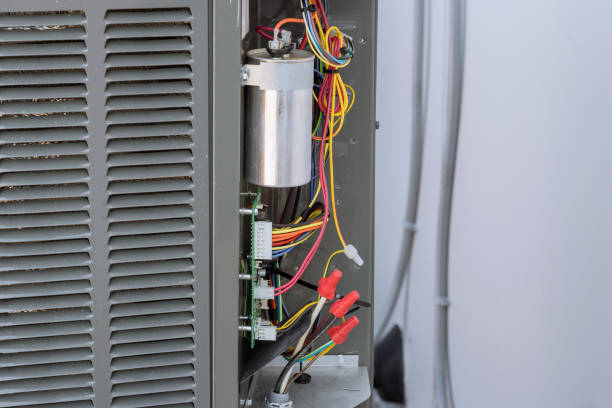
The run capacitor is a small metal cylinder that stores electrical energy and releases it in quick bursts to start your AC’s motors. Think of it like a spring. Every time the compressor or fan motor needs to turn on, the capacitor gives it a surge of power to overcome starting friction.
When the capacitor works correctly, your AC starts smoothly and runs at full power. When it begins to fail, it can’t deliver that initial surge. The motor gets weaker power and has to work harder to do the same job.
The tricky part is that your AC does not simply shut down when the capacitor starts failing. It keeps running, just not the way it should, and that is where the real damage begins. Instead of stopping completely and forcing a service call, the system struggles along in the background, placing ongoing strain on the compressor while everything seems normal at first glance.
What Actually Happens When You Run AC With a Bad Capacitor
The following breakdown shows exactly what happens inside your system when it keeps running with a failing capacitor, and why that small electrical issue can quietly turn into serious damage if it is ignored.
Early stage (first few weeks):
You’ll notice your AC takes longer to kick on. When you set the thermostat to cool, there’s a 10 to 30 second delay before the fan and compressor engage. This delay is your first warning sign.
The system still cools, but not as well as before. Your home stays about 2 to 3 degrees warmer than the thermostat setting. You might compensate by setting the thermostat lower, which just makes the system work harder.
Your energy bill creeps up 5 to 15 percent. The system is running longer and pulling more power because the motors are straining.
Middle stage (weeks to months):
You hear a distinct humming sound when the system starts. The compressor and fan motors are trying to turn on but the capacitor isn’t giving them enough juice. They hum in place for a few seconds before actually spinning.
Cooling becomes noticeably weak. It takes hours to bring your home to the desired temperature, if it reaches it at all. On hot days, your AC might run constantly but still not keep up.
Your energy bills have jumped 20 to 40 percent. The system is working overtime trying to compensate for reduced efficiency.
Late stage (approaching total failure):
The AC cycles on and off rapidly without reaching the set temperature. This is called short cycling: the system overheats and protects itself by shutting down temporarily.
The compressor might make rattling or grinding noises. The bearings are wearing out from the constant strain of operating with reduced starting power.
Eventually, the compressor overheats and triggers a thermal overload switch. The system shuts down for hours while it cools. This is the system’s last-ditch protection mechanism before complete failure.
Total failure:
The compressor simply won’t turn on anymore. The capacitor is completely dead, and the motor can’t overcome the friction to spin. Now you need a service call, and by this point, the constant strain might have damaged the compressor itself.
Why Your AC Doesn’t Just Stop Running
This is the dangerous part that homeowners don’t understand. Your AC is designed to try to keep running even when something is wrong. It has thermal overloads, pressure switches, and other protections that prevent catastrophic damage, but these are last-resort measures.
A bad capacitor isn’t a complete electrical failure. It’s a partial failure. There’s still enough power flowing to keep the motors spinning, just not enough to do the job efficiently. The system interprets this as “working harder is the solution” instead of “something is broken.”
So your AC keeps running, keeps straining, and keeps slowly damaging itself. The compressor wasn’t designed to run with reduced starting torque for weeks. The copper windings overheat. The bearings wear faster. The oil that lubricates the compressor breaks down in the higher heat.
By the time the capacitor dies completely and the system refuses to run, the compressor might already be damaged beyond repair.
Signs Your Capacitor Is Failing Right Now
Check for these symptoms today. If you notice any of them, your capacitor is failing.
Delayed startup: The compressor and fan take 10 or more seconds to engage after you set the thermostat to cool. A healthy system starts within 1 to 3 seconds.
Humming without running: You hear a humming sound from the outdoor unit during startup, but the fan doesn’t turn. The compressor is trying to run but can’t overcome the friction.
Reduced cooling: Your AC runs constantly but doesn’t cool your home to the set temperature. You’re always 2 to 5 degrees warmer than you want to be.
Higher than normal energy bills: Your cooling costs have jumped 15 percent or more compared to last month or last year at the same outdoor temperature.
Short cycling: The system turns on, runs for just a few minutes, then shuts off. It does this repeatedly without ever reaching the desired temperature. This is thermal overload protection triggering.
Visible damage on the capacitor: Go outside and look at the cylindrical component on the side of your outdoor unit. If the top is bulged, domed, or leaking oily residue, the capacitor has failed internally.
What Happens to Your Compressor Under This Stress
Your compressor is an expensive component. A new one costs $1,500 to $3,000 plus installation. Once it’s damaged from operating under reduced starting power, replacement is your only option.
Here’s what constant strain from a bad capacitor does:
Bearing wear: The compressor’s bearings experience more friction and heat. They wear out faster and eventually seize up, making the compressor inoperable.
Winding insulation breakdown: The electrical windings inside the compressor are insulated to prevent internal shorts. When the motor struggles, it heats up more. This heat degrades the insulation over time. Eventually, the insulation fails and the compressor develops an internal short.
Oil breakdown: The oil that lubricates the compressor’s moving parts breaks down faster at higher temperatures. Degraded oil causes more friction and accelerates all the wear mechanisms above.
Thermal stress: The compressor’s metal housing expands and contracts as temperature fluctuates. Constant overheating from strain accelerates metal fatigue and can cause cracks in the housing.
None of this is reversible. Once the damage starts, it only gets worse.
The Real Cost of Waiting
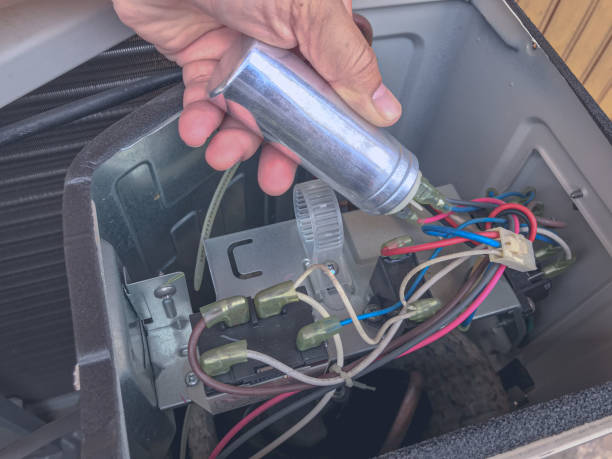
A run capacitor costs $200 to $400 installed. If your AC is still running but showing signs of a bad capacitor, replacing it now takes 30 minutes and fixes the problem completely.
But here’s what happens if you keep running the system:
Your energy bills will be $50 to $100 higher per month. Over six months, that’s $300 to $600 in wasted electricity. The capacitor hasn’t gotten cheaper.
During this time, your compressor is being damaged. When it finally fails completely, replacement costs $3,000 to $5,000 installed. You’ve also been running the system at reduced efficiency the whole time, so you’ve been paying more than normal energy bills all along.
In total, waiting cost you $300 to $600 in extra utilities plus $3,000 to $5,000 in compressor replacement. That’s a $3,300 to $5,600 problem that started as a $300 solution.
And you’ll be without air conditioning for 2 to 3 days while waiting for installation, probably during the hottest part of the year.
A Round Rock Homeowner Ignored a Weak Capacitor Until the AC Started Short Cycling
A homeowner in Round Rock contacted ATX Heating & Air Conditioning LLC after noticing their AC system taking longer and longer to start during the afternoon heat. They also mentioned hearing a humming noise from the outdoor unit before the system finally kicked on, along with higher electric bills over the previous month.
During the inspection, our technician found a failing run capacitor that was no longer delivering the proper electrical charge needed to start the compressor efficiently. The weakened capacitor had already started causing short cycling and extra strain on the system. We replaced the capacitor, tested the compressor and fan motor, and restored normal cooling performance before larger damage occurred.
This is a good reminder that an AC system can continue running with a bad capacitor for weeks while quietly damaging expensive components in the background. Early diagnosis helped the homeowner avoid a much more costly compressor repair later in the summer.
What to Do If Your Capacitor Is Failing
Don’t try to replace it yourself. Capacitors store electrical charge even when power is off. A shock from a capacitor can cause serious injury or death. Even experienced electricians have protocols for safely discharging capacitors before working on them.
Call ATX Heating & Air Conditioning LLC for a diagnostic. Our technicians can test your capacitor in minutes using simple equipment. If it’s failing, we can replace it the same day in most cases.
The cost is straightforward: capacitor cost (usually $50 to $150, depending on your model) plus labor (typically $100 to $250). The total is usually $200 to $400, including the service call.
This is one of the most affordable AC repair options, and replacing it stops all damage to your compressor immediately.
Don’t wait for total failure. Call ATX Heating & Air Conditioning LLC at 737-406-8083 or schedule online to have your capacitor tested today.
FAQs
Can a bad capacitor damage my compressor permanently?
Yes. Running your AC with a bad capacitor puts constant strain on the compressor’s bearings, windings, and oil. This causes wear that can’t be reversed. Once the damage accumulates, compressor replacement is the only option.
How long will my AC keep running with a bad capacitor?
This depends on how bad the capacitor is. A weakening capacitor might let your AC run for weeks or months at reduced capacity. A completely failed capacitor usually stops the system immediately. Don’t count on a specific timeline. Diagnose it early.
Will my AC just stop working if the capacitor fails?
Not necessarily. Many systems will limp along at reduced efficiency because there’s still some electrical power flowing. It won’t completely refuse to run until the capacitor is completely dead. This is why many homeowners don’t realize there’s a problem until significant damage is done.
Can I replace the capacitor myself?
Not safely. Capacitors store an electrical charge that can injure or kill you even after power is turned off. This is a job for certified technicians. It’s inexpensive enough that DIY isn’t worth the risk.
Why does my energy bill go up if the AC still cools?
Because the system is working much harder to achieve the same result. The motors are pulling more current to overcome the weak starting power. A weak capacitor means the entire system operates less efficiently, burning more electricity to produce the same cooling.
Is a bad capacitor covered under warranty?
Most AC warranties don’t cover capacitors because they’re wear items. A capacitor typically lasts 3 to 5 years in Texas heat. After that, replacement is a maintenance cost. Some extended warranty plans cover it, but you’ll need to check your specific contract.
Can a bad capacitor cause a refrigerant leak?
No, but the symptoms can be similar. A bad capacitor reduces cooling and increases energy use. A refrigerant leak does the same thing. That’s why a proper diagnosis is important. A technician can tell you which one it is by testing electrical components and checking refrigerant charge.
How often do capacitors fail in Austin?
Very often. The Texas heat degrades capacitors faster than in cooler climates. Most systems have their first capacitor failure between years 3 and 5. After that, it’s not uncommon for a system to go through multiple capacitor replacements over its lifetime.

