
It’s mid-August in Manor. The thermostat says 76, the living room feels closer to 84, and the outdoor unit has been humming since breakfast without a break.
Somewhere in the back of your mind is the maintenance plan a technician mentioned last spring. You said you’d think about it. Now you’re thinking about it.
Here’s the short answer: for most Manor homes with a central system older than about five years, an HVAC maintenance plan is worth it. But not every plan, and not every home.
Stick with this guide to the end, and you’ll have a five-minute break-even test you can run on your own system, plus the four questions that separate a real plan from a coupon book with a monthly fee attached.
Key Takeaways
- An HVAC maintenance plan is usually worth it in Manor because Central Texas cooling systems run far more hours each year than the national average, and wear tracks with runtime.
- Most plans bundle two tune-ups a year (spring cooling, fall heating) with perks like priority scheduling and repair discounts. The tune-ups alone often cover most of the plan’s cost.
- The plan pays off fastest on systems that are 5 to 15 years old, homes with a heat pump, and households that can’t afford a multi-day outage in July.
- A plan is often not worth it for brand-new systems still covered by an installer’s labor warranty that includes maintenance, or for systems close to replacement.
- Only sign with a contractor licensed by the Texas Department of Licensing and Regulation (TDLR), and get a written checklist of what each visit includes.
- No plan replaces your own filter changes. A clean filter is the cheapest efficiency upgrade you’ll ever make.
What an HVAC Maintenance Plan Actually Includes
An HVAC maintenance plan is a service agreement where a contractor performs scheduled inspections and tune-ups on your heating and cooling equipment for a set annual or monthly fee. Most plans cover two visits per year.
The spring visit focuses on the air conditioner or heat pump in cooling mode. The fall visit focuses on the furnace or heat pump in heating mode.
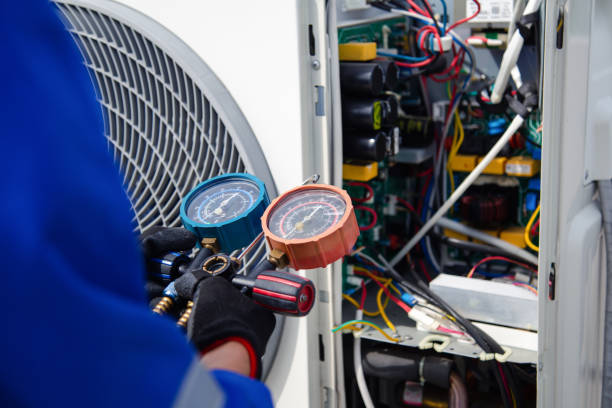
A genuine tune-up is more than a glance at the thermostat. The ENERGY STAR maintenance checklist lays out what a proper pre-season check-up should cover, and it’s a useful benchmark when you compare plans. The core tasks include:
- Checking thermostat settings and calibration
- Tightening electrical connections and measuring voltage and current on motors
- Lubricating moving parts where required
- Inspecting and clearing the condensate drain
- Cleaning the evaporator and condenser coils
- Checking refrigerant charge
- Inspecting gas connections, burners, and the heat exchanger on furnaces
- Checking the blower and airflow
On the cooling side, this is the same work that goes into a standalone AC maintenance visit in Manor. The plan simply puts it on a schedule and adds extra benefits.
Those extras vary by company. Common ones include priority scheduling during heat waves, a percentage off repairs, waived or reduced diagnostic fees, and reminders so the visits actually happen.
That last point matters more than it sounds. The biggest reason homeowners skip maintenance isn’t cost. It’s forgetting until something breaks.
Why Manor’s Climate Changes the Math
Most “is a maintenance plan worth it” articles are written for a generic American home. Manor is not a generic American home.
Wear on an air conditioner tracks with runtime, and Central Texas runs its systems hard. Camp Mabry, Austin’s official weather station about 15 miles west of Manor, averaged 29 days at or above 100°F per year between 1991 and 2020, according to KXAN’s analysis of National Weather Service records. In 2023, it logged 80.
Even a mild year here is a long year. Camp Mabry recorded 22 triple-digit days in 2025, yet temperatures still climbed past 100°F in mid-May, well before most of the country turns on the AC.
The practical result is a cooling season that stretches from roughly April into October. That’s thousands of compressor hours a year, plus fan motors, capacitors, and contactors cycling on and off through every one of them.
Then winter adds its own wrinkle. Manor’s winters are mild most days, but cold snaps still happen. Austin hit 18°F on February 20, 2025. Heat pumps, common in newer Manor subdivisions, work hardest when the defrost cycle, backup heat strips, and reversing valve all need to function properly.
Local Conditions That Add Wear
A few local factors make maintenance even more relevant here:
- Dust and construction. Manor is one of the fastest-growing towns in the Austin metro, with new phases going up around ShadowGlen, Presidential Meadows, Whisper Valley, and along the US-290 corridor. Construction dust loads outdoor coils and indoor filters faster than in a settled neighborhood.
- Cedar season. Mountain cedar pollen peaks across Central Texas in winter, which means filters clog during heating season too, not just in summer.
- Humidity. Manor sits far enough east to catch more Gulf moisture than the Hill Country. Clogged condensate drains are one of the most common summer service calls, and a plugged drain can leak into ceilings and walls.
- Two different utilities. Most of Manor is in Oncor’s delivery territory, while parts of town are served by Bluebonnet Electric Cooperative. Both have offered efficiency or smart thermostat programs in recent years, so check your utility’s current offers before your spring tune-up.
The Break-Even Math: When a Plan Pays for Itself
This is the five-minute test. You don’t need a spreadsheet, just honest answers about your system.
Start with the baseline. Industry pricing for residential maintenance plans commonly falls somewhere between $150 and $400 per year, depending on how many systems you have and what’s included. A single standalone tune-up typically costs between $100 and $300.
So if you were going to book two tune-ups a year anyway, the plan has largely paid for itself before any perks kick in.
Here’s how the value typically stacks up:
| Value Source | What It Looks Like in Practice |
| Two scheduled tune-ups | Often equal to or more than the plan’s annual cost on their own |
| Repair discount | A percentage off parts and labor on any repair during the year |
| Priority scheduling | Your call goes to the front of the line during a July heat wave |
| Reduced or waived diagnostic fees | Removes the cost of simply finding out what’s wrong |
| Energy savings | Clean coils, correct charge, and good airflow keep bills closer to the system’s rated efficiency |
| Avoided failures | Weak capacitors and failing contactors get caught before they strand you |
A Simple Energy Example
The U.S. Department of Energy notes that replacing a dirty, clogged filter with a clean one can lower an air conditioner’s energy consumption by 5% to 15%. Dirty coils and an incorrect refrigerant charge add further losses.
Here’s illustrative math. Say your summer electric bill runs $250 a month for five months, and cooling is about half of that. That’s roughly $625 in cooling costs per season.
A 5% to 15% efficiency loss from neglect is $31 to $94 every summer. That’s from one category of problem, on a modest bill, before counting a single repair.

Run the Test on Your Own System
Answer these four questions:
- Is your system between 5 and 15 years old?
- Have you had at least one repair call in the last three years?
- Would going two or three days without AC in July be a genuine hardship (young kids, older relatives, a home office, pets)?
- Do you honestly forget to book maintenance on your own?
If you answered yes to two or more, a plan is very likely worth it for your home. If you answered yes to all four, you’re probably overpaying by not having one.
Where the Real Value Hides
The tune-ups are the visible part of the plan. A few less obvious benefits often carry more weight over a system’s life.
Catching Small Failures Before They Get Expensive
Most summer breakdowns in Central Texas don’t start with the compressor. They start with a capacitor that’s drifting out of spec, a contactor with pitted points, or a drain line slowly filling with algae.
These parts are inexpensive to replace on a scheduled visit. Left alone, a failing capacitor makes the compressor work harder every time it starts, and a compressor replacement can cost thousands. On older systems, that kind of repair is often the moment homeowners decide to replace the whole unit.
A technician measuring capacitor values twice a year will usually see the drift before it becomes a failure.
Protecting Your Warranty
Many manufacturer warranties exclude damage caused by improper maintenance or neglect. That doesn’t always mean they require annual tune-ups in writing, but a missing service history can complicate a claim.
A maintenance plan creates a dated record of every visit. If a major component fails under warranty, that record proves the system was cared for. Read your own warranty terms so you know what applies to your equipment.
Refrigerant Costs Are Rising
The EPA’s phase-down of HFC refrigerants under the AIM Act has pushed new systems toward R-454B and made R-410A more expensive to buy. Many homes in Manor still run on R-410A.
That means a slow leak you don’t catch costs more to recharge every year it goes unnoticed. Routine pressure and charge checks during a tune-up are one of the best ways to spot a leak early, when repairs still make financial sense.
Priority When Everyone Else Is Calling
During the first real heat wave of the year, HVAC companies across the Austin area get flooded with calls. Plan members typically move to the front of the schedule.
If your AC fails on a 104°F Saturday, the difference between same-day service and a three-day wait can make or break the plan in a single afternoon.
When an HVAC Maintenance Plan Is Not Worth It
A plan isn’t the right call for every Manor home. Here are the situations where you can reasonably skip it.
Your system is brand new and already covered. Some installers include one or two years of maintenance with a new system. If yours did, there’s no reason to pay twice. Just make sure the included visits actually get scheduled.
Your system is near the end of its life. If your equipment is 15 to 20 years old and you’re already budgeting for replacement, paying for a plan may only delay the inevitable. A one-time inspection to decide between repair and replacement is often the better spend.
The plan is mostly a sales funnel. Some plans offer a quick “visual inspection” instead of a real tune-up, then use the visit to push replacements. If the plan doesn’t spell out the tasks performed, or if every visit ends with a pitch for new equipment, it isn’t delivering value.
You’d book and pay for tune-ups anyway. If you’re disciplined about scheduling two visits a year and don’t care about priority service or repair discounts, paying per visit can cost about the same. The plan is really buying convenience and perks.
You’re locked into a long contract. Multi-year prepaid contracts can leave you stuck if you move, sell the house, or become unhappy with the service. Annual or month-to-month plans keep you flexible.
How to Judge a Maintenance Plan Before You Sign
The difference between a good plan and a bad one comes down to a few specifics. Ask these questions before you commit.
Is the Contractor Licensed in Texas?
In Texas, the Texas Department of Licensing and Regulation licenses air conditioning and refrigeration contractors. You can look up any contractor’s license on the TDLR website in under a minute.
A licensed contractor has met state requirements for experience, testing, and insurance. For a plan that puts someone inside your system twice a year, this is non-negotiable.
What Exactly Happens at Each Visit?
Ask for the written checklist. A real tune-up includes coil cleaning, electrical measurements, refrigerant checks, drain line service, and safety checks on gas furnaces. If the answer is vague, the visit probably is too.
What Are the Perks Worth in Dollars?
A “member discount” means nothing without a number. Ask for the exact percentage off repairs, whether diagnostic fees are waived, and whether priority scheduling comes with any guarantee.
Can You Cancel?
Look for annual terms with clear cancellation rules. Avoid plans that auto-renew for multiple years or bury cancellation fees in the fine print.
What You Can Handle Yourself Between Visits
A maintenance plan covers the technical work. A few simple habits between visits make every tune-up more effective.
- Change or clean your filter regularly. During Manor’s peak cooling months, check it monthly. Homes with pets, nearby construction, or allergy sufferers usually need more frequent changes.
- Keep the outdoor unit clear. Trim shrubs and grass back at least two feet, and rinse off cottonwood fluff, leaves, and lawn clippings with a gentle hose spray (never a pressure washer).
- Watch the condensate drain. If you see water pooling near the indoor unit or the drain pan, call before it becomes a ceiling stain.
- Watch for new noises or longer run times. A system that suddenly runs longer to hit the same temperature is telling you something.
- Keep supply and return vents open and unblocked. Closing vents in unused rooms often hurts airflow more than it saves energy.
Don’t attempt refrigerant work, electrical repairs, or gas furnace adjustments yourself. Those require licensed technicians and the right equipment.
How to Decide on an HVAC Maintenance Plan for Your Manor Home
So, is an HVAC maintenance plan worth it? In Manor, the answer is yes more often than in most of the country, and the reason is simple: your system works harder here.
Long cooling seasons, real heat waves, dusty growth corridors, and the occasional hard freeze all reward the homeowner who catches small problems early. A good plan turns that intention into something that actually happens twice a year.
The key word is “good.” A plan worth paying for includes a real tune-up checklist, measurable perks, flexible terms, and a licensed contractor who explains what they found without turning every visit into a sales pitch.
Think about the full year, too. Spring visits protect you through the summer, but the fall visit matters just as much for heat pumps and gas furnaces. A seasonal furnace maintenance visit in Manor checks burners, the heat exchanger, and safety controls before the first cold front, which is when carbon monoxide and ignition problems tend to show up.
If you’d like a straight assessment of whether a plan makes sense for your system, ATX Heating & Air Conditioning LLC can take a look. We’re a family-owned, TDLR-licensed HVAC company (TACLA142610C) based right here in Manor, and we’ll tell you honestly whether a plan, a one-time tune-up, or a replacement conversation is the smarter move for your home. Call 737-221-4420 to schedule.
FAQ
How much does an HVAC maintenance plan cost in Manor, TX?
Residential HVAC maintenance plans commonly range from about $150 to $400 per year, depending on how many systems your home has and what the plan includes. Ask any contractor for the exact annual price, the number of visits, and the dollar value of each perk before you sign.
How often should HVAC maintenance be done in Central Texas?
Twice a year is the standard recommendation: a cooling check in spring before the heat arrives and a heating check in fall before the first cold front. Because Manor’s cooling season runs from roughly April into October, the spring visit is especially important.
Is an HVAC maintenance plan worth it for a new system?
It depends on what came with your installation. If your installer included maintenance visits for the first year or two, use those first. Once they run out, a plan becomes worth considering, especially if your warranty terms reference proper maintenance.
Does an HVAC maintenance plan cover repairs?
Usually not in full. Most plans cover the scheduled tune-ups and offer discounts on repairs, reduced diagnostic fees, or priority scheduling. Parts and labor for repairs are typically billed separately at the member rate.
Can I do my own HVAC maintenance instead of buying a plan?
You can handle filter changes, clearing debris from the outdoor unit, and watching the condensate drain. A licensed technician should do coil cleaning, electrical testing, refrigerant checks, and gas furnace safety inspections. In Texas, that means a contractor licensed by TDLR.

