

Your thermostat is set to cool, but your home keeps getting warmer. Inside, the blower may still be running, yet the outdoor AC unit is completely silent. No fan, no humming, no signs that the condenser is working. On a hot Central Texas day, that can be enough to make any homeowner worry.
Fortunately, an outdoor AC unit that won’t turn on doesn’t always mean you need a major repair. The problem could be something as simple as a tripped breaker, a thermostat setting, or a disconnect switch that’s been turned off. In other cases, it may point to a failed electrical component or another issue that requires professional attention.
In this blog, we’ll cover the most common reasons an outside AC unit won’t turn on, the safe troubleshooting steps you can take yourself, and when it’s time to call an HVAC technician.
Key Takeaways
- Start with the basics: thermostat setting, tripped breaker, and the outdoor disconnect switch.
- A failed capacitor is the most common reason an outdoor AC unit won’t start.
- A clogged drain can trip a float switch that shuts the whole system off.
- Never open the outdoor unit or touch electrical parts; capacitors hold dangerous charge.
- Regular maintenance prevents most sudden AC failures before peak Texas summer heat arrives.
Why Your Outside AC Unit Won’t Turn On
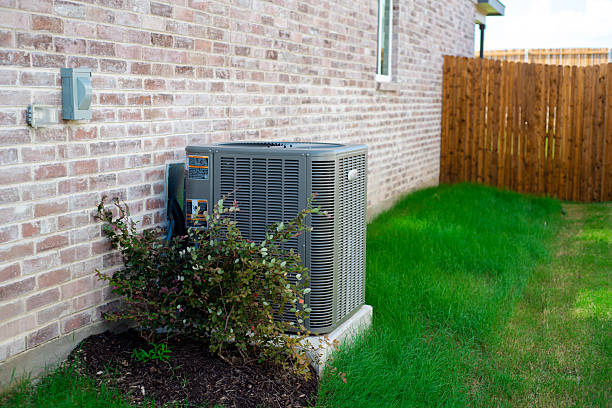
When the outdoor unit stays silent, it’s either not getting power or an internal part has failed. The condenser and its fan need a working electrical path and a few healthy components to start, and a break anywhere in that chain stops the whole unit.
The usual causes fall into a short list. According to Carrier’s troubleshooting guidance, the problem typically lies with a tripped breaker, a safety float switch triggered by water backup, or a failed internal component like a capacitor or contactor. Add a wrong thermostat setting, a flipped disconnect switch, and a dirty filter that froze the system, and you’ve covered the vast majority of no-start calls.
Some of those you can check safely in a few minutes. Others involve high-voltage parts that are genuinely dangerous to touch. Knowing which is which keeps you safe and saves you money.
What to Check First When the Condenser Won’t Start
Run through these steps in order. Every one is safe for a homeowner, and any of them could get your system running again without a service call.
1. Check the thermostat. Make sure it’s set to “cool” and the target temperature is several degrees below the current room temperature. Try fresh batteries if the screen is dim or blank. It sounds obvious, but a bumped setting or a dead thermostat is a surprisingly common reason the outdoor unit never gets the signal to start.
2. Check your circuit breaker. Find the breaker for the AC or condenser in your electrical panel. If it’s tripped to the middle position, flip it fully off, then back on. If it trips again right away, stop. A breaker that won’t stay set points to an electrical fault that needs a professional, not repeated resets.
3. Check the outdoor disconnect switch. Near the outdoor unit is a small service box on the wall, usually holding a pull-out disconnect. Sometimes it gets bumped, left out after service, or fails. Make sure it’s fully seated. If it was pulled, reseating it may restore power to the condenser.
4. Replace a dirty air filter. A clogged filter starves the system of airflow, which can freeze the indoor coil and shut everything down on a safety. Check the filter, and if it’s gray and packed with dust, swap it and give the system a few hours to thaw before restarting.
5. Look for a tripped float switch. Check the drain pan under the indoor unit for standing water. Your AC has a safety switch that cuts power when the condensate drain backs up, and a full pan means the switch has tripped. Clearing the clog is the fix, though a recurring backup should be inspected.
If the unit starts after any of these, you’re back in business. If it stays silent, the cause is likely inside the unit, and that’s where the safe part ends.
The Outdoor AC Repairs You Should Never DIY
Once you’ve ruled out the basics, resist the urge to open the outdoor unit. The condenser holds high-voltage components, and one of them, the capacitor, stores a powerful electrical charge even after the power is off. Touching it the wrong way can cause a serious shock.
Several common failures live behind that access panel. A failed capacitor, a burned-out contactor, a seized fan or compressor motor, damaged wiring, or a refrigerant problem can all keep the unit from starting, and each requires tools, testing, and training to handle safely. These are the repairs where guessing gets expensive or dangerous fast.
This is the point to bring in a technician. Professional AC repair in Manor, TX covers failed capacitors, contactors, motors, refrigerant issues, and electrical faults, with the right diagnostic tools to find the actual problem instead of swapping parts and hoping. A correct diagnosis the first time almost always costs less than trial and error.
How to Tell If It’s a Bad Capacitor
A specific symptom points straight at the most common culprit. If you hear a humming or buzzing sound from the outdoor unit but the fan won’t spin, a failed start or run capacitor is the likely reason. The capacitor gives the motors the jolt they need to get moving, and when it dies, the motor tries to run but can’t.
Capacitors fail more than any other part, and Central Texas heat is hard on them. You may also notice the fan spinning slowly, the unit shutting off shortly after starting, or a faint smell of something electrical. Some people try to “help” the fan spin with a stick, which is both unsafe and only a temporary sign of the real problem.
A capacitor replacement is a routine repair for a technician and usually quick. The important thing is letting someone with the right tools discharge and test it safely rather than opening the unit yourself.
Why Outdoor AC Units Fail During Central Texas Summers
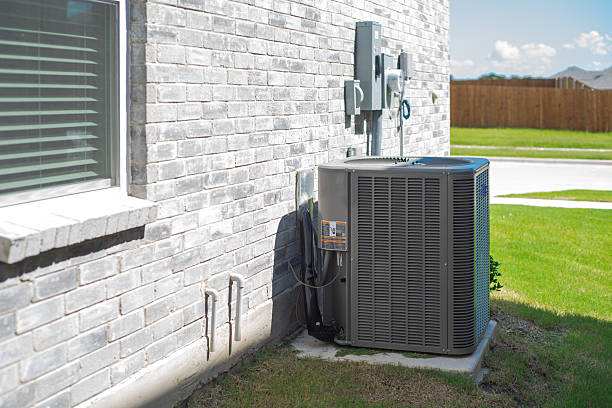
The timing of these failures is no accident. Outdoor units break down most often in the peak of summer because that’s when they work the hardest, and the heat itself accelerates wear on the exact parts most likely to fail.
When it’s over 100 degrees, your condenser runs for hours at a time with little rest. That constant load stresses the capacitor, contactor, and motors, and a marginal part that limped through spring finally gives out under a full summer load.
Dirty condenser coils make it worse by trapping heat around the very components that are already running hot. Homes across Manor, Austin, Pflugerville, Round Rock, and Hutto see the same pattern every July and August.
That’s why prevention pays off. Scheduling AC maintenance in Manor, TX before the hottest months lets a technician test the capacitor, clean the coils, check refrigerant, and catch weak parts before they fail on the worst possible day. Most sudden breakdowns are preventable with a tune-up that costs a fraction of an emergency repair.
Getting Your AC Running Again in Manor and Central Texas
The smart approach when your outside unit won’t start is to check the easy stuff first, thermostat, breaker, disconnect, filter, and drain pan, then stop before touching anything electrical. Those five checks resolve a good share of no-start calls. When the condenser is still silent after that, the cause is almost always a capacitor, contactor, motor, or wiring fault that needs a trained hand and the right tools.
ATX Heating & Air Conditioning LLC is a family-owned, licensed and insured HVAC company based in Manor with more than 13 years of experience, BBB accreditation, and same-day and emergency service.
The team focuses on honest diagnostics and long-lasting repairs, with transparent pricing and no unnecessary upselling. If your outside AC unit won’t turn on after the basic checks, contact ATX Heating & Air Conditioning or call (737) 406-8083 to get your cooling back fast.
FAQ
Why is my inside unit running but the outside AC unit won’t turn on?
When the indoor blower works but the outdoor condenser stays silent, the outdoor unit is either losing power or has a failed component. Check the disconnect switch by the unit and the breaker in your panel first. If those are fine, the cause is often a bad capacitor or contactor, which requires a technician to test and replace safely.
Is it safe to reset my AC breaker myself?
Resetting a tripped breaker once is safe. Flip it fully off, then back on. If it trips again immediately, do not keep resetting it, because repeated tripping signals an electrical fault or a shorted component. Continuing to reset it can be a fire risk, so call a professional to diagnose the cause.
Why does my outside AC unit hum but the fan won’t spin?
That humming with no fan movement is a classic sign of a failed capacitor. The capacitor supplies the starting jolt the fan and compressor motors need, and when it fails, the motor draws power but can’t turn. Turn the system off to avoid overheating the motor and schedule a repair, since the capacitor holds a dangerous charge.
Can a clogged drain line stop my outside AC unit from turning on?
Yes. A clogged condensate drain causes water to back up, which trips a float safety switch that shuts the whole system down to prevent water damage. Check the drain pan under the indoor unit for standing water. Clearing the line restores operation, but a drain that keeps clogging should be inspected.
Do you offer emergency AC repair near me in Manor and Austin?
Yes, ATX Heating & Air Conditioning LLC provides same-day and emergency AC repair for homeowners in Manor, Austin, Pflugerville, Round Rock, Hutto, and surrounding Central Texas communities. Technicians quickly diagnose whether the issue is electrical, a failed part, or the thermostat, then restore cooling. Call (737) 406-8083 to schedule service.

