
Furnace repair is not the kind of thing you think about until 6 a.m. on a 24-degree January morning in Manor, when the house is 51 degrees and no warm air is coming from the vents. Suddenly it is the only thing you can think about, and the second thought after “will someone come out today?” is usually “how much will this cost?”
Furnace repair in Manor and the broader Austin area typically runs from $72 for a simple flame sensor cleaning to $2,250 or more for a cracked heat exchanger, with $270 the average bill across Texas. Where you land depends on the failed part, the age and fuel type of your system, and whether you are calling during one of Central Texas’s rare freeze events. In this guide, you will get real 2026 pricing by component, the Manor rules that quietly affect what you pay, and the federal rebate that changes the math entirely when a repair conversation turns into a replacement conversation.
Key Takeaways
- Furnace repair in Manor, TX averages $270 in Texas, ranging widely from $72 to $2,250.
- Ignitor replacement runs $100 to $250; heat exchanger swaps can climb to $3,000 in worst cases.
- Manor requires a mechanical permit for major furnace repair and full system replacement work.
- Federal HEEHRA rebates offer up to $8,000 toward qualifying heat pump upgrades in Texas.
- Even in mild Central Texas winters, freeze events like Winter Storm Uri devastate unprepared systems.
Average Furnace Repair Cost in Manor, TX (2026)
Homeowners in Texas pay an average of $270 per furnace repair in 2026, with the full range spanning $72 for small fixes to $2,250 for major component work. Manor sits inside Travis County and tracks closely with the broader Austin metro on labor rates, which typically fall between $50 and $75 per hour for HVAC service calls, plus around $50 for each additional crew helper on the job.
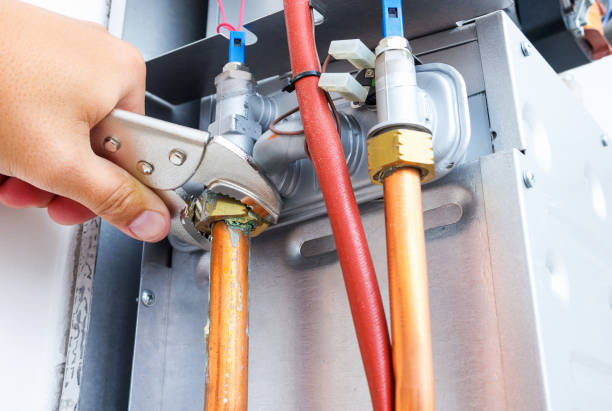
Gas furnaces cost more to repair than electric furnaces because they involve additional safety checks, combustion testing, gas valve inspections, and heat exchanger evaluation. A typical gas furnace repair runs $100 to $550, while an electric furnace repair usually falls between $100 and $400. Heat pumps, which handle both heating and cooling for many newer Manor homes, sit in a different category with repair costs closer to central AC systems: roughly $200 to $1,500 for common failures.
Diagnostic and emergency premiums stack on top. Most Manor HVAC companies charge $50 to $150 to send a technician out and identify the problem, and after-hours or freeze-event service can add another $150 to $400 to the final bill.
Furnace Repair Cost Breakdown by Component in Manor, TX
Here is what specific furnace problems typically cost in the Manor area in 2026.
Furnace Ignitor Replacement: $100-$250
The ignitor is a small ceramic or silicon-carbide element that lights the burner. When it fails, your furnace stops producing heat entirely. The part itself is cheap ($15 to $35), but installed replacement runs $100 to $250 including diagnostic time. Ignitors are consumables with a typical lifespan of three to seven years, so this is one of the most common furnace repairs in Manor homes.
Flame Sensor Cleaning or Replacement: $80-$250
The flame sensor is a safety device that shuts off gas flow if it fails to detect a flame after ignition. A dirty flame sensor is one of the most common “my furnace lights briefly then shuts off” complaints in Central Texas because oxide buildup accumulates during the long off-season between February and November. Cleaning is usually enough. Full replacement lands in the $80 to $250 range.
Blower Motor Replacement: $400-$1,500
The blower motor circulates heated air through your ductwork. Variable-speed ECM blower motors on newer 2020-plus systems sit at the high end of that range. Traditional PSC blower motors on older Manor homes cost less but still add up fast once labor is included.
Control Board Replacement: $400-$800
The furnace control board manages ignition timing, safety interlocks, blower speed, and thermostat communication. When lightning strikes or power surges hit (both common during Central Texas storm season), the control board is often the first casualty. Replacement runs $400 to $800 including diagnostic time.
Heat Exchanger Replacement: $1,500-$3,000+
The heat exchanger is where combustion heat transfers to the air moving through your home. Cracks in it let carbon monoxide leak into living spaces, which is why this repair is safety-critical. On any furnace over 15 years old, a cracked heat exchanger usually means it is time to replace the whole system rather than the exchanger alone.
Thermostat Repair or Replacement: $75-$300
Programmable thermostats sit at the low end; smart thermostats (Nest, ecobee, Honeywell) at the high end. Ghost readings, short cycling, and “furnace won’t respond” complaints often trace back to the thermostat before the furnace itself.
Gas Valve Replacement: $200-$800
The gas valve controls fuel flow to the burner. When it fails, your furnace either will not ignite or will not stay lit. Gas valve work must always be performed by a licensed Texas HVAC contractor because of the safety and code implications.
Draft Inducer Motor Replacement: $300-$600
The draft inducer motor pulls combustion gases out through the flue. When it fails, safety switches shut the furnace down. Repair costs run $300 to $600 including diagnostic time.
Pilot Light or Thermocouple: $75-$250
Older gas furnaces (pre-2000) with standing pilots occasionally need pilot relighting or thermocouple replacement. Most Manor homes built in the last 25 years use electronic ignition instead, so this is mostly an issue for older custom builds out in the Manor countryside and Kimbro area.
Gas vs. Electric vs. Heat Pump Repair in Manor
Not every “furnace” in a Manor home is the same kind of equipment, and repair costs vary accordingly.
Gas Furnaces are the most common in Manor homes built between 1990 and 2020, powered by Texas Gas Service, the natural gas utility serving Manor 78653. Gas systems cost more to repair on average ($100 to $550) because they involve combustion, gas valves, heat exchangers, and safety interlocks that electric systems do not have. They also require yearly safety inspections that electric furnaces do not.
Electric Furnaces are common in newer subdivisions off the US-290 corridor and in all-electric homes without natural gas service. Repair costs are lower ($100 to $400) because the equipment is simpler: heating elements, sequencers, blower motor, and a control board. The tradeoff is higher operating cost through winter, since electric resistance heating pulls significantly more power than gas.
Heat Pumps are the fastest-growing heating option in Central Texas because Manor’s mild winters make them a natural fit. A heat pump handles both cooling and heating in one system. Repair costs mirror central AC systems ($200 to $1,500 or more, depending on the issue) since they share most of the same components: compressor, coils, refrigerant lines, reversing valve. Federal HEEHRA rebates (covered below) make heat pump upgrades particularly attractive right now for Manor households.
What Actually Drives Your Final Furnace Repair Bill
Same failure, same brand, different quotes. Here is why one Manor homeowner pays $250 for a repair while their neighbor pays $600 for the same job.
Fuel Type. Gas furnace repairs generally run 20 to 40 percent higher than electric because of the additional safety work, gas testing, and licensed-only requirements for anything touching the gas line.
System Age. A 5-year-old furnace under warranty often costs labor only. A 15-year-old system out of warranty pays full parts and labor, and older parts may need to be special-ordered from the manufacturer.
Warranty Status. Registered manufacturer warranties typically cover heat exchangers for 10 to 20 years and other major parts for 5 to 10 years. If your original installer never registered your warranty, you may still be able to prove eligibility with the invoice and serial number, so it is worth digging for the paperwork before you approve a big repair.
Time of Year and Weather. A furnace repair on a 68-degree Tuesday in April is not the same call as one during a January freeze event when every HVAC company in Manor is triaging emergencies. Expect $150 to $400 in premium pricing during major cold snaps.
Brand and Part Availability. Common brands like Carrier, Trane, Lennox, Goodman, Bryant, and Rheem are stocked on most Manor service trucks. Less common brands may require part orders that push the repair into a second visit and add labor hours.
Diagnostic Complexity. A simple ignitor swap is a 20-minute job. Diagnosing an intermittent limit switch trip, a hairline heat exchanger crack, or a control board fault can take two to three hours before the actual repair begins.
Why Manor’s Mild Winter Still Wrecks Furnaces (The Winter Storm Uri Effect)
Central Texas winters look forgiving on paper. January averages a low of 42.6 degrees Fahrenheit and a high of 58.8 in Manor, and February is not much colder. That mild profile is exactly why Manor homeowners are often unprepared for what freeze events actually do to heating systems.

Winter Storm Uri in February 2021 is the reference point every Manor HVAC technician still uses. The storm impacted all 254 Texas counties, left roughly 4.5 million homes without power at its peak, killed more than a hundred people, and caused an estimated $295 billion in damage. Many families with gas furnaces still lost heat because modern gas furnaces need electricity to run the ignitor, blower motor, and control board. When ERCOT’s grid failed, gas heat failed with it, except for older systems with standing pilots and gravity venting.
The damage did not stop at power loss. Sustained sub-freezing temperatures cracked heat exchangers, split refrigerant lines on heat pumps, froze condensate drains, and burst pipes in homes never designed for extended arctic conditions. HVAC companies across Central Texas were still catching up on Uri-related repair calls six months later.
That is the pattern Manor furnaces have to survive: eight to ten months of low demand followed by a sudden multi-day cold snap that pushes an under-maintained system past its limit. A furnace that ran fine last February can fail hard the next time temperatures drop into the teens, especially if it has not been serviced in over a year. Annual maintenance is the difference between “this system will handle the freeze” and “this system will fail on the coldest night of the year.”
Manor Permits, Texas Licensing, and Gas Safety Rules That Move the Price
Small furnace repairs (ignitor swap, flame sensor cleaning, filter change, thermostat replacement) do not require a permit in Manor. But once the work involves a full furnace replacement, a heat exchanger swap, or any gas line modification, a mechanical permit is required through the City of Manor Development Services. All permit applications submitted after May 27, 2026 go through Manor’s GovWell portal, and initial review takes roughly 30 days.
Permit fees add $100 to $300 to a full replacement job, but skipping the permit voids your equipment warranty and can create insurance problems if a fire, gas leak, or CO event occurs down the road. That is not a risk worth taking to save $200.
Texas HVAC contractors are licensed through the Texas Department of Licensing and Regulation under the Air Conditioning and Refrigeration Contractor License program. Class A licenses cover any size system; Class B is limited to cooling systems of 25 tons or less and heating systems of 1.5 million BTUs per hour or less, which covers virtually every residential furnace in Manor. Always verify your contractor’s TDLR license number before signing anything. ATX Heating & Air Conditioning LLC operates under Texas HVAC License #TACLA142610C.
Beyond code compliance, gas furnace work is safety-critical work. Carbon monoxide poisoning kills more than 400 Americans a year, and cracked heat exchangers are one of the leading causes. Any Manor contractor who quotes gas furnace work without pulling a permit, providing a TDLR license number, and running a combustion analysis at the end of the job is cutting corners on the wrong things.
Federal HEEHRA Rebates That Can Offset Repair or Replacement Costs
If your furnace repair conversation crosses into “we should replace this whole system,” federal money is on the table for the right upgrade.
The High-Efficiency Electric Home Rebate Act (HEEHRA), passed as part of the 2022 Inflation Reduction Act, offers up to $8,000 in point-of-sale rebates for qualifying heat pump installations. Texas administers HEEHRA through the State Energy Conservation Office (SECO). Rebates deduct directly from the installation price, so you do not have to file for a refund after the fact.
The catch is income eligibility:
- Households earning less than 80 percent of Area Median Income (AMI) receive 100 percent of project costs covered, up to $8,000 for a heat pump and up to $14,000 combined with related upgrades
- Households earning 80 to 150 percent of AMI receive 50 percent of project costs covered
- Households above 150 percent AMI do not qualify for HEEHRA
For Travis County (which includes Manor), 80 percent AMI for a family of four sits around $80,300, and 150 percent AMI sits around $150,700. If your household falls under those thresholds and your existing gas furnace is approaching replacement age, a heat pump upgrade with an $8,000 rebate can effectively net you a new heating and cooling system for a small fraction of retail cost.
Ask any Manor HVAC contractor whether they are enrolled with SECO as a HEEHRA participating installer before you sign a replacement quote. Federal rebates only apply through registered installers.
Diagnostic Fees and Emergency Service Costs in Manor
Most Manor HVAC companies charge a $50 to $150 diagnostic fee to send a technician to your home and identify the furnace problem. Many companies waive the diagnostic fee if you approve the repair on the same visit.
That is worth asking about when you call. If a company charges a non-waivable $95 diagnostic and then quotes $450 for the repair, you are paying $545 total. If they waive the diagnostic when you approve the work, the same repair is $450.
For after-hours emergency service on nights, weekends, holidays, or during a rare Central Texas freeze event, expect a $150 to $400 premium on top of the standard service call. That premium is often unavoidable during the January and February freeze window, when every HVAC company in the Austin metro is running triage schedules.
When Furnace Repair Is Not Worth It: The Manor Repair-vs-Replace Math
Most residential gas furnaces last 15 to 20 years. Electric furnaces last a bit longer. Heat pumps track closer to central AC lifespans at 12 to 15 years in Central Texas heat. Here is when repair stops making sense.
Cracked Heat Exchanger on a System Over 12 Years Old. A heat exchanger replacement runs $1,500 to $3,000 on a system that may only have two or three years of useful life left. Replace the whole furnace instead.
Multiple Recent Repair Calls. Two or more service calls in the last two winters usually signals that the next major failure is close. Newer 96-plus percent AFUE furnaces run 30 to 40 percent more efficiently than 15-year-old 80 percent AFUE units, so the replacement pays back through lower gas bills over five to seven years.
Repair Cost Approaches 50 Percent of Replacement. Full furnace replacement in the Austin area runs roughly $1,478 to $1,633 for a basic gas unit and $3,000 to $5,000-plus for a high-efficiency system with any needed ductwork. If your repair quote exceeds 50 percent of a new install, replacement is the smarter move.
HEEHRA Eligibility. If your household qualifies for HEEHRA and you are eligible for up to $8,000 in rebates on a heat pump, the replacement math changes dramatically. A $1,500 repair may cost more out of pocket than a heavily subsidized new install.
How to Cut Your Furnace Repair Costs in Manor, TX
The cheapest furnace repair is the one you avoid. Here is what actually works in Manor:
Schedule a Fall Tune-Up Every October. A pre-winter tune-up from a licensed technician catches ignitor wear, flame sensor buildup, cracked heat exchangers, and gas valve issues before the first freeze warning of the season. A $150 tune-up prevents a $400 emergency call more often than not. For a full seasonal service list and Manor-specific tune-up pricing, check out furnace maintenance in Manor, TX.
Change Your Filter Every 60 to 90 Days. A restricted filter causes overheating, limit switch trips, and premature blower motor failure. Filters cost $10 to $30. Repairs from clogged filters cost $200 to $600.
Test Your Thermostat Batteries Every September. Many “furnace will not start” calls in November trace back to dead thermostat batteries. This is a five-minute test that saves an emergency call.
Prep for Freeze Events Before the Forecast Arrives. When a winter storm advisory hits Central Texas, run your furnace briefly to confirm it actually works before you need it. Verify your carbon monoxide detector is functional. Have flashlights and phone chargers ready in case ERCOT’s grid comes under stress again.
Never DIY Gas Work. Every year, Manor homeowners try to save $200 by adjusting gas valves, replacing burners, or “cleaning” the flame sensor with the wrong material. Every year, some of those DIY jobs cause fires or CO events. Gas work is TDLR-licensed contractor work, period.
Enroll in a Maintenance Plan. Most Manor HVAC companies offer maintenance memberships that include two seasonal tune-ups, priority freeze-event service, and 10 to 15 percent off repairs. If you are likely to need any repair over the winter, the plan usually pays for itself.
Warning Signs Your Manor Furnace Needs Immediate Repair
Furnaces rarely fail without warning. Watch for these signs during heating season:
- A yellow, wavering, or orange flame at the burner (should be steady blue): incomplete combustion, possible carbon monoxide risk
- A rotten-egg or sulfur smell: gas leak, evacuate and call Texas Gas Service or 911
- Any carbon monoxide detector alarm near the furnace or in sleeping areas
- Cold air blowing from vents when the thermostat is calling for heat
- Bangs, thumps, or booms at ignition: delayed ignition, dangerous over time
- Short cycling, meaning the furnace kicks on and off every couple of minutes
- Rising heating bills without any change in usage or thermostat settings
- Visible soot buildup around the furnace, vents, or nearby walls
Any of these problems should be handled with a same-day service visit during heating season, especially when temperatures are dropping. For urgent issues, schedule furnace repair in Manor, TX with ATX Heating & Air Conditioning LLC for same-day service and access to commonly needed replacement parts.
Getting a Fair Furnace Repair Quote in Manor, TX
The best way to control furnace repair costs in Manor is not shopping around after your system dies at 5 a.m. on a 22-degree morning. It is building a relationship with a licensed local HVAC company before the first freeze warning of the season. A contractor who has serviced your system, knows its history, and stocks the right parts will always beat a stranger showing up on emergency dispatch with a blank estimate pad.
When you do get a furnace repair quote, three things separate a fair Manor HVAC quote from a rip-off:
- Written, flat-rate pricing before any work starts. Never approve open-ended hourly work on a gas appliance.
- A verifiable Texas TDLR license number on every invoice and every truck. Verify it before you sign.
- A permit pulled through the City of Manor for any replacement, heat exchanger swap, or gas line modification.
ATX Heating & Air Conditioning LLC delivers same-day furnace repair across Manor with flat-rate upfront pricing, a Texas HVAC license (#TACLA142610C), and 15 years of hands-on experience keeping Central Texas homes warm through mild winters and rare freeze events alike. If your furnace is struggling as freeze season approaches, call ATX Heating & Air Conditioning LLC at 737-406-8083 for a same-day service call, or ask about financing and HEEHRA eligibility if the conversation turns into a replacement.
Frequently Asked Questions
What is the average cost of furnace repair in Manor, TX?
Furnace repair in Manor and across Texas averages $270 per job in 2026, with the full range spanning $72 for simple fixes to $2,250 for major work like heat exchanger replacement. Gas furnace repairs typically run 20 to 40 percent higher than electric because of additional safety work and gas licensing requirements.
Do I need a permit for furnace repair in Manor, TX?
Small repairs (ignitor, flame sensor, filter, thermostat) do not require a permit. Full furnace replacements, heat exchanger swaps, and any gas line modifications require a mechanical permit through Manor Development Services, submitted via the city’s GovWell portal since May 2026. The permit must be pulled by a licensed HVAC contractor.
Is emergency furnace repair more expensive in Manor?
Yes, usually. Most Manor HVAC companies charge a $150 to $400 emergency premium for nights, weekends, holidays, and freeze events. Some companies (including ATX Heating & Air Conditioning LLC) do not add emergency surcharges, so it is worth asking upfront when you call.
Can I use a HEEHRA rebate on furnace repair in Manor?
HEEHRA rebates apply to full replacements with a heat pump, not to repairs on your existing gas or electric furnace. Qualifying Manor households can receive up to $8,000 toward a heat pump installation through Texas SECO, with additional amounts for related upgrades up to $14,000 total. Income eligibility caps at 150 percent of Area Median Income.
How do I know if I should repair or replace my furnace in Manor?
Replace if your furnace is over 12 to 15 years old and needs a major repair like a heat exchanger, control board, or blower motor. Replace if repair costs exceed 50 percent of a new install. Replace if your household qualifies for HEEHRA and a heat pump upgrade makes the subsidized math favorable.
Is a cracked heat exchanger dangerous?
Yes. A cracked heat exchanger allows carbon monoxide to escape into your home. Carbon monoxide is odorless and can be fatal in high concentrations. If your technician confirms a cracked heat exchanger, shut the furnace off, ventilate the space, and do not run the system until it is repaired or replaced. Install and regularly test a battery-backed CO detector in every sleeping area.

