
Cold fronts here have a habit of showing up fast after months of your furnace sitting quietly unused. Most of us do not think about our furnace until that first cold morning when we need it, and that’s exactly the moment a little bit of prep would have helped most.
The U.S. Consumer Product Safety Commission estimates that 204 unintentional, non fire carbon monoxide deaths were associated with consumer products in 2021, and heating systems accounted for 63 of those, with furnaces and boilers specifically responsible for 24.
Checking your furnace before you actually need it is not just about comfort. It is a safety check too. Below, we will walk through what is safe for you to check yourself and what should always go to a trained technician, along with the one safety habit that matters more than almost anything else on this list.
Key takeaways:
- Test your carbon monoxide detectors before you test your furnace, not after.
- Checking and replacing your air filter is the single biggest DIY task that actually matters.
- A cracked heat exchanger, a gas line, or an ignition system is technician only work, never a DIY check.
- In Central Texas, a furnace that sits idle most of the year still needs an annual check before the first cold front.
- A faint burning dust smell the first time you run your furnace after months of disuse is normal and brief.
Your Fall Furnace Checklist at a Glance
Before we get into details, here is the short version. On your own, you can check and replace your filter, test your thermostat, clear the area around your vents and furnace, and test your carbon monoxide detectors. Leave the heat exchanger, burner, ignition system, gas line, electrical connections, and blower motor to a licensed technician. Keep reading for the why behind each one.
Why Fall Matters More Here Than in Other Climates
A furnace in a colder climate runs for months on end, which means problems tend to show up gradually and get noticed early. Here in Central Texas, our furnace often sits mostly unused for most of the year and then gets asked to work hard, fast, the moment a cold front rolls through.
One quick note that catches people off guard every year. The first time you run your furnace after months of sitting idle, you might notice a faint burning dust smell; that’s normal. It’s just dust burning off the heat exchanger, and it should clear within a short time.
What is not normal is a smell that lingers, smells distinctly like gas, or comes with any visible smoke. If you notice any of those, stop and call a professional rather than waiting to see if it passes.
Safe Homeowner Checks You Can Do Yourself
These are the tasks you can handle on your own before your technician ever shows up.
Check and Replace the Air Filter
Check your filter every one to three months, and replace it sooner if it looks visibly dirty. This is the single most impactful thing you can do yourself, since a clogged filter restricts airflow and makes your whole system work harder than it needs to.
Test Your Thermostat
Switch your thermostat over to heat mode and confirm your furnace actually responds, ideally on a mild day rather than the first genuinely cold one. This way, if your thermostat has dead batteries or needs recalibrating, you find out before you actually need the heat.
Clear the Area Around Vents, Registers and the Furnace
Keep furniture, boxes, and general clutter away from your supply and return vents, and maintain clear space around the furnace itself. This helps both efficiency and safety, since good airflow is part of how your system stays within safe operating limits.
Listen and Look for Warning Signs
Pay attention to unusual noises, any smell beyond that brief first use dust smell we mentioned earlier, or a furnace that simply does not respond when you need it to. Any of these is your cue to schedule a professional check rather than wait and hope it resolves on its own.
Test Your Carbon Monoxide Detectors Before You Test Your Furnace
The Consumer Product Safety Commission recommends testing your smoke and carbon monoxide alarms monthly and replacing their batteries annually. Given that heating systems accounted for 63 non-fire carbon monoxide deaths in the CPSC’s 2021 estimate, with furnaces and boilers specifically responsible for 24 of those, this is not a box to check and forget.
If you are wondering how long your actual alarm unit should last before replacement, check the manufacturer’s instructions for that specific device rather than relying on a general rule, since this varies by model.
What a Professional Furnace Tune Up Includes
These tasks require training, tools, and safety knowledge that go well beyond what any homeowner should attempt alone.
Heat Exchanger, Burner and Ignition Inspection
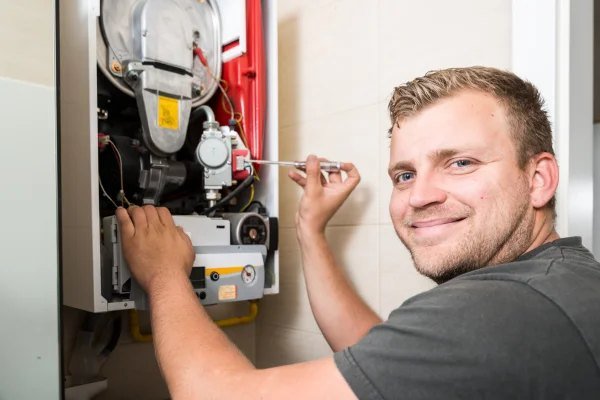
A cracked heat exchanger is a genuine carbon monoxide risk, and it needs a trained technician to catch it. This is not something you can safely assess yourself, no matter how careful you are, which is exactly why this inspection sits at the center of any real safety focused tune up.
Gas Line, Pressure and Electrical Checks
Gas pressure testing and electrical connection checks both require a licensed professional. Please never attempt to inspect, adjust, or test your own gas lines, pressure settings, or electrical wiring.
Blower Motor, Belt and Amp Draw Testing
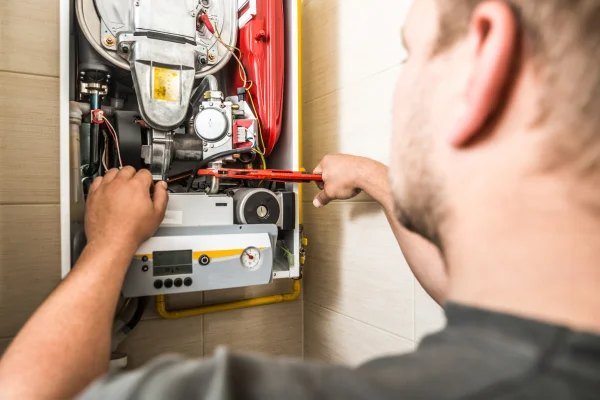
Your technician will lubricate and performance test your blower motor as part of a routine tune up, which helps extend the life of your equipment and keeps it running the way it was designed to.
Condensate Drain (for High Efficiency Furnaces)
If you have a high efficiency condensing furnace, it has a condensate drain that your technician checks and clears as part of a thorough tune up. It is a small detail, but a clogged drain can cause real problems if it goes unnoticed.
If You Smell Gas or Suspect a Carbon Monoxide Leak
If this happens, safety comes first, full stop. Leave your home immediately. Do not flip light switches, use your phone inside, or do anything that could create a spark. Once you are safely outside, call 911 or your gas utility’s emergency line.
Only once you know it is safe should you contact an HVAC professional to follow up. Do not go back inside to investigate the smell or check on anything yourself. Let the professionals handle that part.
How Often Should You Service Your Furnace?
Most HVAC professionals recommend an annual tune up, ideally scheduled in the fall before cold weather increases demand on your system. Even though Central Texas furnaces run far fewer hours overall than they would in a colder climate, an annual fall check is still the right rhythm for catching small issues before that first cold front puts real demand on your equipment.
If Your Furnace Shares a System With Your AC
Many Central Texas homes run their furnace and air conditioner off a shared air handler and the same ductwork. That means some items, like duct and airflow checks, may already get covered during an AC maintenance visit earlier in the year.
What is furnace specific, though, like the heat exchanger, ignition system, and gas connections, still needs its own dedicated check regardless of how recently your AC was serviced.
Schedule Your Fall Tune Up
A furnace that sits mostly idle for most of the year still deserves a yearly check before it is asked to perform during that first cold front. ATX Heating & Air Conditioning can get the technician only items on this checklist handled before something goes wrong rather than after. Give us a call at 737 221 4420 to schedule your fall tune up.
Frequently Asked Questions
How often should I service my furnace?
Most HVAC professionals recommend an annual tune up, ideally in fall before cold weather increases demand on your system. Here in Central Texas, where furnaces run far fewer hours than in colder climates, an annual fall check is still the right cadence to catch issues before the first cold front.
Can I clean or replace my furnace filter myself?
Yes, checking and replacing your air filter is a safe task you can handle yourself, and it is the single most impactful DIY item on this checklist. Industry guidance commonly suggests checking every one to three months and replacing sooner if it looks visibly dirty.
Is it safe to run a furnace without annual maintenance?
Running a furnace without regular maintenance increases the risk of undetected issues like a cracked heat exchanger, which is a genuine carbon monoxide hazard. An annual professional check is how you catch that kind of problem before it becomes dangerous.
What does it mean if my furnace smells like gas or rotten eggs?
That smell can indicate a gas leak and should be treated as an emergency. Leave your home immediately, avoid anything that could create a spark, including light switches, call 911 or your gas utility’s emergency line from outside, and do not go back in until you know it is safe.
Why does my furnace need its own maintenance if my AC was recently serviced?
Some tasks, like duct and airflow checks, may already be covered if your furnace and AC share an air handler, but furnace specific items like the heat exchanger, burners, ignition system, and gas connections still need their own dedicated check.

