

Replacing an old air conditioner is a major investment, and it’s natural to have questions before the work begins. One of the most common is whether you need a permit to replace your AC in Manor or Travis County. Many homeowners aren’t sure if it’s a required part of the process or just unnecessary paperwork.
In most cases, replacing a central air conditioning system does require a permit to help ensure the installation meets local building and safety codes. The good news is that if you’re working with a licensed HVAC contractor, obtaining the necessary permit is typically their responsibility, not yours.
In this blog, you’ll learn when an AC replacement permit is required, why it matters, who pulls the permit, and what to expect during the installation process in Manor and Travis County.
Key Takeaways
- Replacing your AC in Manor or Travis County almost always requires a mechanical permit.
- In Texas, your licensed HVAC contractor pulls the permit, not you the homeowner.
- City of Manor handles permits inside city limits; Travis County covers unincorporated areas.
- Permits require an inspection that confirms the installation meets current safety and building codes.
- Skipping a permit risks fines, insurance denials, and problems when you sell your home.
Do You Need a Permit to Replace an AC in Manor or Travis County?
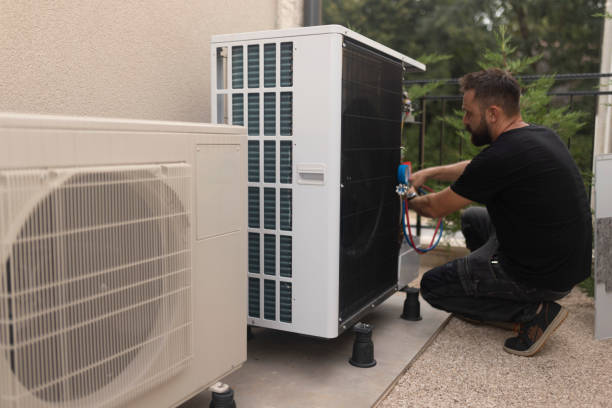
Yes, in almost all cases. Swapping out a central air conditioner counts as mechanical work, and mechanical work triggers a permit requirement in most Texas jurisdictions. As a general rule, replacing HVAC equipment requires a permit and at least one inspection, even when you’re installing a similar system in the same spot.
A lot of homeowners assume a like-for-like change-out is exempt. It usually isn’t. The permit exists because a new system involves electrical connections, refrigerant, and equipment that has to meet current code, not the code from whenever your old unit went in. That’s true whether you’re upgrading to a bigger system or replacing a failed one with the same size.
The one thing that changes from home to home is which office issues the permit, and that comes down to exactly where you live.
Who Pulls the Permit, You or Your Contractor?
Your licensed contractor pulls the permit, and in Texas that’s not optional. HVAC work has to be performed by a contractor licensed through the Texas Department of Licensing and Regulation, and that licensed contractor is the one who applies for the mechanical permit on your behalf. Homeowners generally cannot pull an HVAC permit for work a contractor is doing.
This is actually good news for you. It means the permitting, the paperwork, and the inspection scheduling all sit with the professional, not on your to-do list. A reputable contractor builds the permit into the job as a matter of course.
It also gives you a simple way to vet whoever you hire. Professional AC installation in Manor, TX from a licensed contractor includes handling the permit and inspection as part of a code-compliant install. If a bidder tells you to skip the permit or asks you to pull it yourself, treat that as a red flag about how they operate.
Which Jurisdiction Handles Your Permit: Manor or Travis County?
The office that issues your permit depends on whether your home sits inside the city limits or in unincorporated county land. Two different authorities cover the area, and knowing which one applies to you saves confusion later.
If your home is inside Manor city limits, the City of Manor handles building and mechanical permits through its permitting department. If your home is in unincorporated Travis County, permitting runs through Travis County Development Services instead. Travis County is clear on this point: any development in the county requires a permit, and its Development Services office oversees permits for areas outside city limits.
Not sure which one you fall under? Your address determines it, and a licensed local contractor will know the boundaries in your area. It’s one of the practical advantages of hiring a company that works in Manor and Travis County every week rather than an out-of-town outfit guessing at local rules.
Why AC Permits Actually Matter, Not Just Red Tape
A permit isn’t a cash grab. It buys you an independent inspection that confirms your new system was installed safely and correctly, and that protection follows the home for years.
Start with safety and code. The inspection verifies the electrical work, the equipment, and the installation meet current building codes, which catches the kind of shortcuts that cause problems down the road. A permitted, inspected install is documented proof the work was done right.
Then there’s your money. Many manufacturer warranties expect a licensed, code-compliant installation, so a permitted job helps protect your equipment coverage. Homeowners insurance can also come into play: if an unpermitted AC install contributes to a fire or water damage claim, an insurer may push back on paying. A permit removes that argument before it starts.
What Happens If You Skip the Permit
Skipping the permit can feel like saving time and money up front, but the risks land squarely on you as the homeowner, not the contractor who cut the corner. The costs tend to show up at the worst possible moment.
The immediate exposure is enforcement. Unpermitted mechanical work can trigger fines, and the jurisdiction can require you to apply for a permit after the fact, expose the work for inspection, and redo anything that doesn’t pass. That’s more expensive than doing it right the first time.
The bigger hit often comes at resale. Unpermitted work has to be disclosed, and it routinely surfaces during a buyer’s inspection or the appraisal. A missing AC permit can stall a sale, spook a buyer, or force you to fix and permit the work under deadline pressure. A small permit fee today prevents a much larger headache when you list the house.
How a Licensed Contractor Keeps Your AC Replacement Code-Compliant
The cleanest way through all of this is to hire a licensed local contractor and let them own the process end to end. Beyond pulling the permit, a good installer makes sure the new system is right for your home, not just wired in and walked away from.
That starts with proper sizing. A licensed contractor should calculate the correct system size for your home rather than defaulting to whatever the old unit was, because an oversized or undersized replacement wastes energy and shortens equipment life. From there, they handle the permit, coordinate the inspection, and confirm the install passes.
The relationship shouldn’t end at inspection either. Keeping up with AC maintenance in Manor, TX protects the manufacturer warranty on your new system and catches small issues before they become AC repair emergencies during a Central Texas summer. A licensed contractor keeps your investment protected long after the permit is closed out.
Planning an AC Replacement in Manor? Start Here
The takeaway is simple: an AC replacement in Manor or Travis County almost always needs a permit, your licensed contractor is the one who pulls it, and the permit protects your safety, your warranty, your insurance, and your home’s resale value. The permit fee is minor next to what an unpermitted install can cost you later.
ATX Heating & Air Conditioning LLC is a family-owned, licensed and insured HVAC company serving Manor, Austin, and the surrounding Central Texas communities, with more than 13 years of experience and BBB accreditation.
The team handles code-compliant AC installations, including permitting and inspections when required, and sizes every system properly instead of guessing. If you’re planning a replacement and want straight answers about permit requirements, contact ATX Heating & Air Conditioning or call (737) 406-8083 to schedule a consultation.
FAQ
Do you legally need a permit to replace an AC unit in Texas?
In most Texas jurisdictions, yes. Replacing a central AC is considered mechanical work, which generally requires a permit and at least one inspection. Requirements are set locally, so the exact rule depends on your city or county, but a full system change-out in Manor or Travis County almost always needs one. Your licensed contractor confirms the requirement and pulls the permit.
Who is responsible for getting the AC permit, me or the contractor?
Your licensed HVAC contractor is responsible. Texas requires HVAC work to be done by a contractor licensed through the Texas Department of Licensing and Regulation, and that contractor pulls the mechanical permit for the job. Homeowners generally cannot pull an HVAC permit for work a contractor performs, so permitting should already be built into your installer’s quote.
How do I know if my home is in Manor city limits or unincorporated Travis County?
Your property address determines it, and the answer sets which office issues your permit. Homes inside Manor city limits permit through the City of Manor, while homes in unincorporated areas permit through Travis County Development Services. A licensed local contractor who works in the area regularly can confirm your jurisdiction and handle the correct permit for you.
What happens if my AC was replaced without a permit?
Unpermitted work can lead to fines, a required after-the-fact permit, and re-inspection that may force parts of the job to be redone. It also has to be disclosed when you sell, where it often surfaces during the buyer’s inspection or appraisal and can delay or complicate the sale. Permitting the work correctly from the start avoids these problems.
Does ATX Heating & Air Conditioning handle permits for AC installation near me?
Yes, ATX Heating & Air Conditioning LLC handles code-compliant AC installations for homeowners in Manor, Austin, and surrounding Central Texas communities, including permitting and inspections when required. The team confirms whether a permit is needed for your project, pulls it, and manages the installation to local code. Call (737) 406-8083 to schedule a consultation.

