

If you have ever gotten a quote for a mini split and felt confused about why it did not match the number you saw online, you are not alone. Maybe you only need to cool one room, like a converted garage or a new home office, or maybe you are planning a bigger project that covers several rooms at once.
Here is a number that actually explains why: according to the U.S. Department of Energy, most ductless mini split systems support up to four indoor zones running off a single outdoor unit, and the connection between the two can be as compact as a roughly three inch wall penetration.
That single fact is the reason zone count, not just square footage, drives most of what you pay. In this guide, we will walk through exactly what moves your mini split installation cost up or down, how single zone and multi zone systems are priced differently, and what you should ask before you book anything.
Key takeaways:
- Zone count drives your installed cost more than almost any other factor, and the price per zone usually drops as you add more zones to one outdoor unit.
- Electrical work, like a new circuit or a panel upgrade, is the most common reason a quote ends up higher than expected.
- The federal tax credits many older guides still mention are no longer available for equipment placed in service after December 31, 2025.
- Planning for every zone you want now, even if you install them in phases, usually costs less than adding a zone later.
- An “installed cost” and an “equipment cost” are two different numbers, and comparing a quote to the wrong one is where most sticker shock comes from.
What Drives Your Mini Split Installation Cost
Before you look at a single dollar figure, it helps to understand the handful of variables that actually move your price. The big ones are zone count, electrical scope, line set length, and the efficiency tier of the equipment you choose.
Zone count matters because every indoor head needs its own line set run and its own spot on the wall or ceiling. Electrical scope matters because older homes were not always built with the extra circuit capacity a mini split needs.
Line set length matters because the refrigerant line connecting your indoor and outdoor units has a practical limit, and longer runs or more wall penetrations mean more labor. And efficiency tier matters because a higher SEER rated system costs more upfront but can save you money over the years it runs.
That last point carries extra weight here in Central Texas. Our cooling season runs long, which means your mini split logs far more hours per year than it would in a milder climate.
Single Zone vs. Multi Zone: What’s Actually Different
A single zone system pairs one outdoor condenser with one indoor head, cooling and heating one room or open area. A multi zone system pairs one larger outdoor condenser with several indoor heads placed in different rooms, each one controllable on its own.
How a Single Zone System Is Priced
A single zone project is the simplest version of this installation. You are paying for one indoor head, one outdoor unit, one line set run, mounting hardware, and typically a single dedicated circuit.
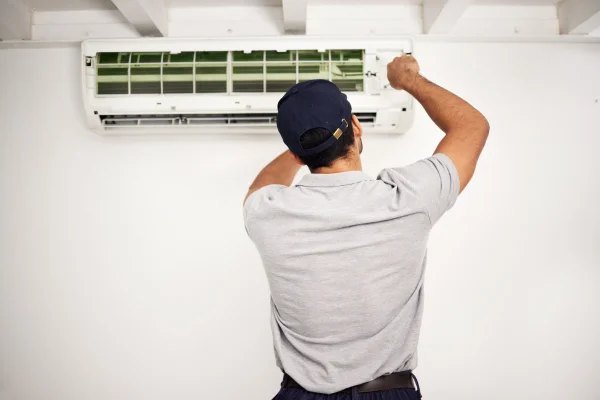
This setup tends to be the most budget friendly entry point into ductless comfort and works well for a single room that needs its own climate control, like a converted garage, a sunroom, or a home office that your existing ductwork does not reach.
How a Multi Zone System Is Priced (and Why It Doesn’t Scale Per Zone)
This is where a lot of homeowners get surprised, and it is also where most online guides fall short. When you add a second or third zone, you are not just paying for another indoor head.
Your outdoor unit needs to be sized larger to handle the combined load, each added zone still needs its own line set run and its own wall penetration, and the whole setup needs zoning capable controls so each room can be set to its own temperature independently.
The result is that your cost per zone typically drops compared to installing several standalone single zone systems, but your total project cost still climbs with every zone you add. Think of it less like buying in bulk and more like building out a system piece by piece, where each piece still has its own labor and materials attached to it.
The Cost Factors That Move Your Price Up or Down
Once you understand zone count, the rest of your quote comes down to a handful of specific line items. Knowing what each one covers will help you read any quote with a clearer eye.
Equipment Cost vs. Installed Cost
This distinction trips up more people than almost anything else. The “starting at” price you often see online is usually the equipment cost alone, meaning just the indoor and outdoor units themselves, with no labor, electrical work, or materials included.
Your actual installed cost covers all of that plus the technician’s time, so comparing a contractor’s full quote to an equipment only number online will almost always make the quote look inflated when it is not.
Electrical Scope: Circuits, Panels, and Disconnects
Many homes need a new dedicated circuit run to support a mini split, and older electrical panels sometimes need a capacity check or upgrade before they can safely support a multi zone setup. This is frequently the reason an initial ballpark estimate grows once a technician actually inspects your panel in person.
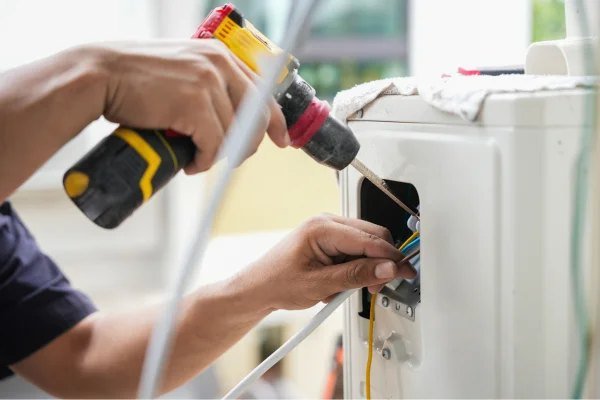
It is also one of the few parts of this project you should never attempt yourself. Opening an electrical panel or running a new circuit is licensed electrician or HVAC technician work, and it needs to be done by someone trained to do it safely.
Line Set Length and Routing
The refrigerant line connecting your indoor and outdoor units has a practical length limit, and the Department of Energy notes that most residential systems are commonly designed within about 50 feet. Longer runs, extra wall penetrations, or routing through an attic all add labor time.
Speaking of attics, ours in Central Texas regularly climb past 120 degrees in summer, which is worth keeping in mind when a technician explains why a particular routing choice adds time or materials to your quote.
Mounting, Condensate Management, and Controls
Your indoor head can mount on a wall, as a ceiling cassette, or even at floor level depending on the room. Condensate, meaning the moisture the system pulls out of the air, usually drains downhill on its own, but if your indoor unit cannot drain that way, you will need a small condensate pump instead.
Add in the zoning controls or thermostats needed to run each area independently, and you have a handful of smaller cost factors that most online guides barely mention.
Permits and Inspections in Manor and Travis County
Electrical work, and sometimes mechanical work, generally requires a permit, though the exact scope depends on your specific project. We recommend confirming the current permit requirement and fee directly with your installer or the local permitting office before work begins rather than assuming a project is permit free.
Should You Install All Zones Now or Add a Zone Later?
If you already know you want comfort in more than one room, it is almost always worth planning for all of those zones from the start, even if you choose to install them in phases. Here is why: an outdoor unit sized only for today’s single zone may not have the spare capacity to add a second zone down the road.
That often means replacing the outdoor unit entirely rather than simply adding to it, which costs more than if you had planned ahead. If budget means you need to phase the work, ask your installer whether the outdoor unit you choose now has room to grow before you commit.
Mini Split Installation Cost in Central Texas Homes
A couple of local realities are worth calling out here, since they genuinely change the math rather than just adding flavor text. Our long cooling season means your equipment runs more total hours per year than it would somewhere with a shorter summer, which tips the scale a bit further toward paying more upfront for a higher efficiency system.
And attic heat, which regularly exceeds 120 degrees, is a real factor in how your line sets get routed and insulated, not just a throwaway detail.
Mini Split vs. Central Air: Which Costs Less to Install?
A single zone mini split tends to be less disruptive and less costly to install when you are adding comfort to one room with no existing ductwork. Extending or replacing central ducted air conditioning can cost more upfront, but it may make more sense if you want whole home comfort managed from one system.
If you are weighing both, our team can walk you through central air conditioning installation as a side by side comparison based on your actual home.
Are There Still Rebates or Tax Credits for Mini Splits in 2026?
This is worth addressing directly, since a lot of guides still floating around online have not caught up. The federal 25C Energy Efficient Home Improvement Credit and the 25D Residential Clean Energy Credit are no longer available for equipment placed in service after December 31, 2025.
If you are counting on a federal credit to offset part of your installation cost, check current eligibility with a tax professional before you budget around it. State or utility level rebates may still exist separately from that federal credit, so it is worth asking your installer whether anything currently applies to your project.
Questions to Ask Before You Book an Installation
Before you sign off on any quote, bring a short list of questions with you and ask about the following:
- Whether the number in front of you is equipment only or fully installed
- Whether your electrical panel needs an upgrade and, if so, what that adds to the total
- How many zones the outdoor unit being quoted can actually support, in case you want to expand later
- What is covered under warranty for parts versus labor, since those are often two very different timelines
Get a Clear, Itemized Quote
The real cost of a mini split comes down to zone count, electrical scope, and line set routing, not one sticker price pulled from a search result. If you are planning a single room addition or a whole home multi zone project, ATX Heating & Air Conditioning can walk you through a written quote that shows equipment and installed costs separately, so you know exactly what you are paying for. Give us a call at 737 221 4420 to get started.
Frequently Asked Questions
Do I need an electrician to install a mini split?
Often, yes. Many homes need a new dedicated circuit, and some panels need a capacity check before a multi zone system goes in. A licensed HVAC contractor typically coordinates this electrical work as part of the project instead of leaving it for you to arrange separately.
Is it cheaper to install all zones at once or add zones later?
Usually it is cheaper to plan for every zone upfront, even if you install them in phases, since adding a zone later can require a larger outdoor unit than the one you already have. Ask your installer whether your unit has spare capacity before adding on.
Is a mini split cheaper than central air to install?
It depends on your specific project. A single zone mini split is often less costly for one room with no ductwork, while central air may make more sense for comfort across your whole home. There is no single answer that fits every house.
Are federal tax credits still available for mini splits in 2026?
No. The federal 25C and 25D credits that many older guides still mention are no longer available for equipment placed in service after December 31, 2025. Check with a tax professional and ask your installer about any current state or utility rebates instead.
Do mini splits need a permit in Manor?
That depends on the scope of electrical and mechanical work your project involves. Ask your installer to confirm what is required before work begins rather than assuming your project is permit free.

